
Barn and agricultural roof repairs in Ireland
Storms hit farm buildings hardest. Sheeting repairs and replacement, asbestos roofs, TAMS grants and getting a shed roof watertight again, with rated local roofers across all 26 counties.
Why storms wreck farm roofs first
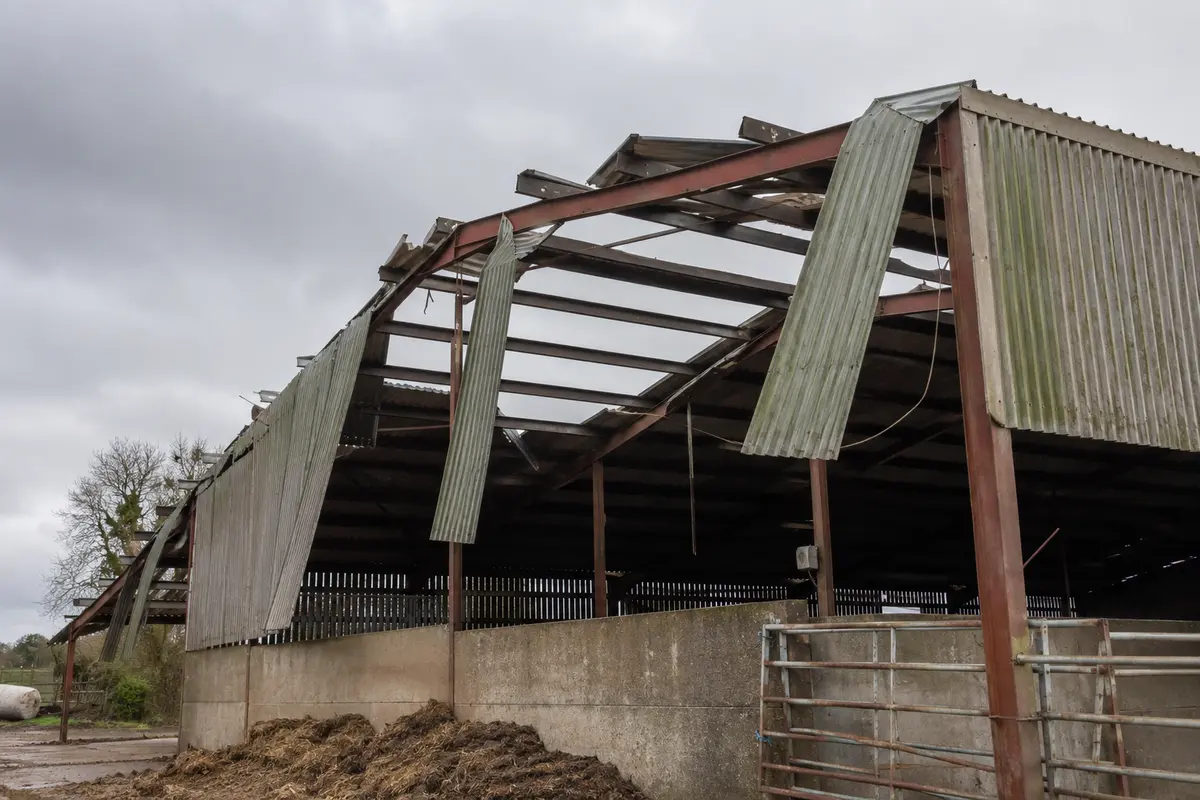
Hay barns, slatted sheds, cattle and machinery sheds present a large, exposed surface to the wind, often in open countryside with nothing to break an Atlantic gale. Every significant storm in Ireland strips and lifts agricultural roof sheeting somewhere in the west and northwest, and a single lifted sheet quickly takes its neighbours with it.
The result can be anything from a few displaced sheets to a whole roof peeled off a shed, with the contents, livestock and machinery left exposed to the weather. Getting the roof made safe and watertight again quickly matters as much on a farm as on a home, and the bigger spans and heights mean it is a job for an experienced roofer with the right access equipment.
Agricultural roof types and repairs
Fibre-cement sheeting
The traditional farm roof. Durable but brittle with age, prone to cracking and to sheets lifting at the fixings in high wind.
Box-profile steel
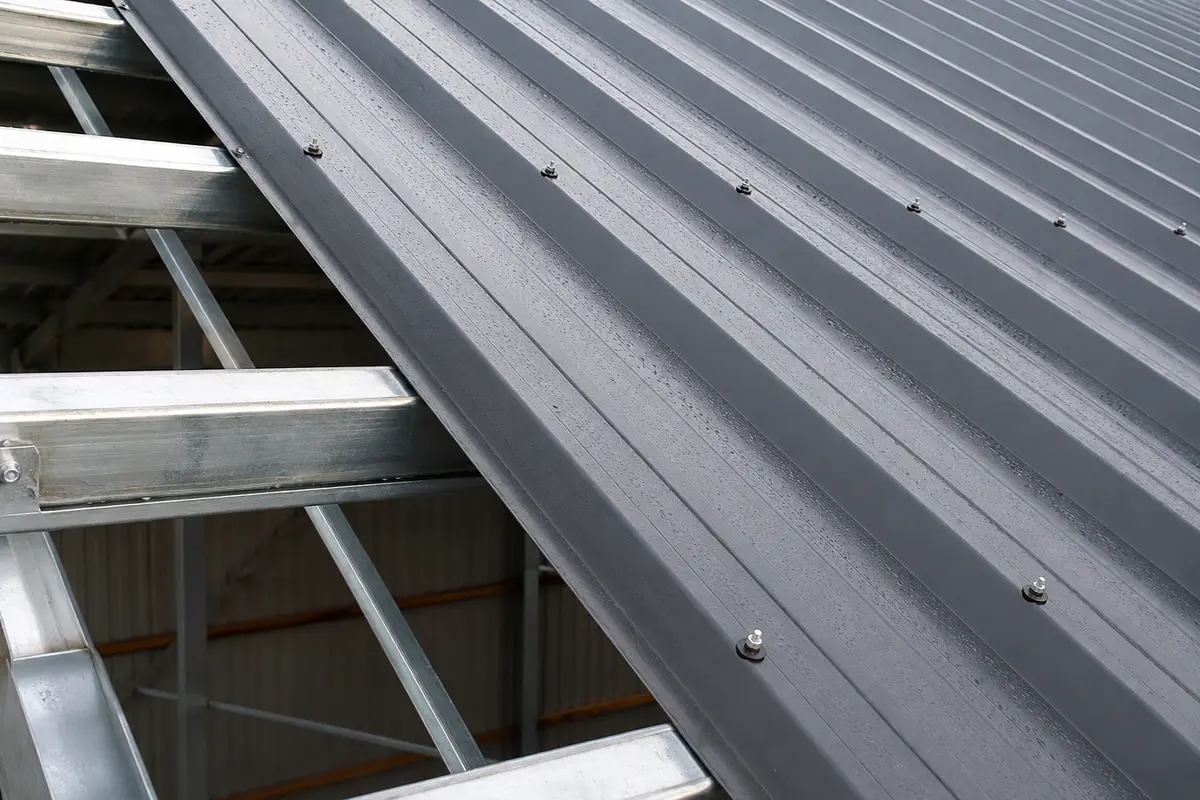
Modern coated steel cladding, used on new and replacement roofs. Strong and quick to fit, with a long lifespan when fixed correctly.
Asbestos roofs
Older sheds often still have asbestos-cement roofs. These must be handled and removed under strict regulations, never broken up on site.
Rooflights and gutters
Cracked rooflights and large box gutters are common weak points and a frequent source of leaks into a shed.
Sheeting repairs and full re-roofs
A handful of lifted or cracked sheets can often be replaced like for like, refixed to the purlins with the correct cap fixings and seals so the repair holds in the next gale. Where a storm has stripped a large area, or the sheeting is at the end of its life, a full re-roof in modern box-profile steel is usually the better value.
Box-profile steel is strong, quick to fit over the existing frame and long-lasting when fixed properly, and it is the standard choice for replacing both tired fibre-cement and removed asbestos roofs. A roofer will check the purlins and structure at the same time, as fixings only hold as well as what they are screwed into.
Asbestos roofs need specialist handling
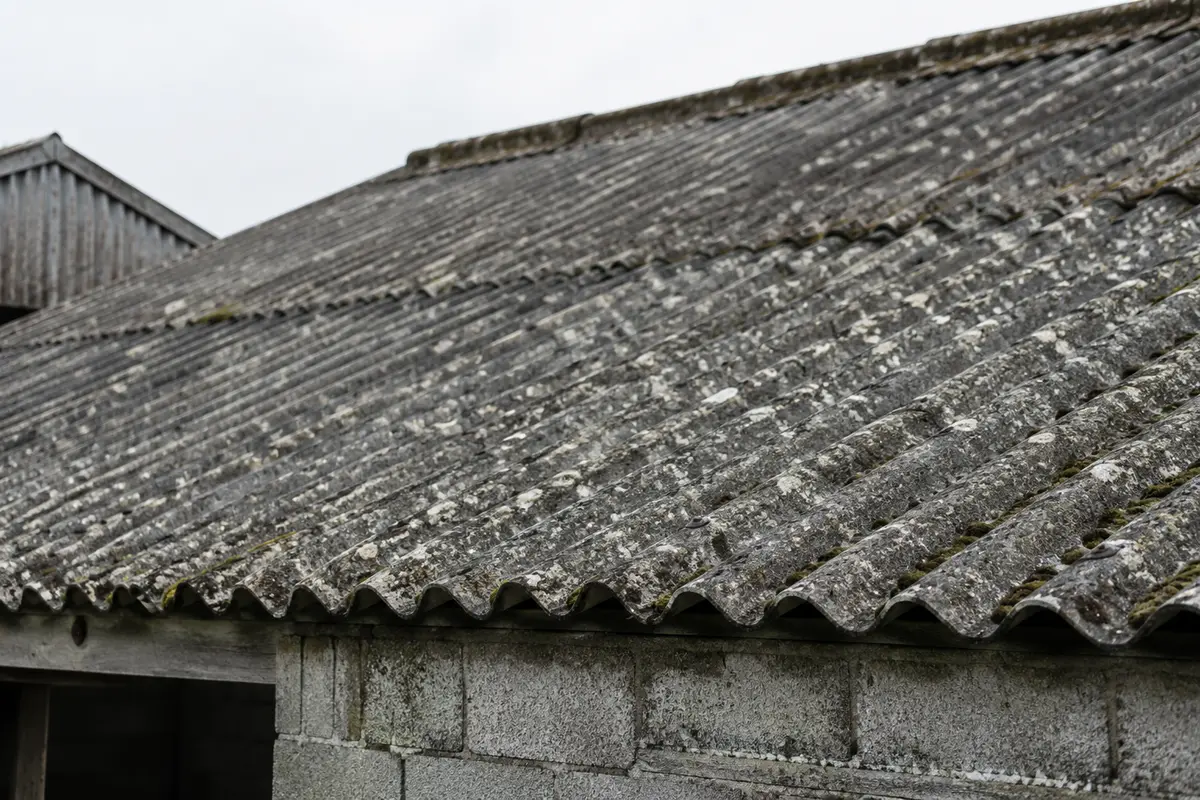
A large number of older Irish farm buildings still have asbestos-cement roof sheets. While they are generally safe when left undisturbed, storm damage that cracks or breaks them, or any attempt to remove or replace them, releases fibres that are hazardous to health.
Asbestos roof removal in Ireland is regulated work: it must be carried out safely, with the correct controls, and the waste disposed of at a licensed facility. Never break up or skip-dump asbestos sheets. If your shed has an asbestos roof that has been storm-damaged, use a roofer experienced in handling it, and factor safe removal and disposal into any replacement.
TAMS grants and insurance for farm roofs
Replacing a farm roof can attract grant aid. The Targeted Agricultural Modernisation Scheme, known as TAMS, has supported investment in farm buildings, including re-roofing and the removal of older asbestos roofs as part of an upgrade, subject to the scheme's terms and approval.
Storm damage to farm buildings may also be covered by farm insurance. A roofer can provide the written report and quote you need for both a grant application and an insurance claim.
Agricultural roofers by county
Select your county to find rated local roofers with Google ratings and phone numbers. Many cover agricultural and commercial roofing as well as homes.