
Fascia, soffit and guttering contractors in Ireland
Searching for fascia, soffit and guttering work near you? Compare 662 rated local roofline specialists for uPVC fascia, soffit, gutters and downpipes across all 26 counties. Tell us about the job and we will match you with roofers in your county.
Free and no obligation. Most roofers reply within 24 hours.
What do you need a roofline contractor for?
Pick what brought you here and we will point you to the right local contractors. Every roofer in our directory is rated, reviewed and free to contact.
My gutters are overflowing
Get a fast clean, repair or replacement callout near you.
Rotten or peeling fascia
Replace tired timber boards with low-maintenance uPVC.
Replace fascia and guttering
Compare quotes for a full uPVC roofline replacement.
I want to know the cost
See 2026 fascia and guttering prices for Ireland.
Fascia and guttering contractors by county
Select your county to see rated fascia, soffit and guttering contractors near you, with phone numbers, Google ratings and opening hours.
Fascia, soffit and guttering for Irish homes
Your roofline is the line of board and guttering that runs along the eaves of the house, and it does far more than finish off the look of the roof. The fascia is the upright board fixed to the rafter ends that carries the guttering. The soffit is the board underneath, closing off the gap between the wall and the edge of the roof. The gutters and downpipes catch the rain that runs off the roof and carry it safely away from the walls and foundations. Together they manage every drop of rainwater the roof sheds and protect the timbers and walls behind them. In the Irish climate, with the rain we get, that job never stops.
When the roofline fails, the damage spreads quickly. Overflowing or leaking gutters soak the wall below, leading to damp inside the house, while rotten fascia and soffit let water reach the rafter ends and the roof structure itself. The contractors in our directory install, repair and replace every part of the roofline, from a simple gutter clean to a full strip-out and refit in modern uPVC. From roofline specialists in Dublin and Cork to fascia and guttering fitters in Galway, Limerick and Waterford, there are rated contractors in every county ready to quote.
Most homeowners now choose uPVC over timber for fascia and soffit because it never rots, never needs painting and lasts decades in the wet, where timber must be repainted every few years and eventually rots if neglected. The other big decision is whether to replace or repair: a sound run of guttering can often be cleaned and resealed, while a brittle, sagging roofline is better renewed in one go. Use this page to weigh up uPVC against timber, get a feel for 2026 prices and shortlist a contractor, then send your details to get quotes back from rated roofers in your county. For the technical detail, our fascia and guttering guide goes deeper, and our roofing cost guide breaks down prices across every job. Every roofer listed here is a real business with a public Google rating, and we never sell leads or take a cut.
What a roofline contractor covers
Fascia, soffit and guttering work breaks down into four jobs. A contractor may do one of them or all of them as a single roofline replacement.
Fascia boards
The upright board fixed to the ends of the rafters along the eaves. It carries the weight of the guttering and supports the bottom row of tiles or slates, so it must be sound. Rotten or split fascia is the most common reason a whole roofline gets renewed, and uPVC is the usual replacement.
Soffit boards
The horizontal board tucked under the fascia, closing off the gap between the wall and the roof edge. It keeps birds and pests out of the loft and, when vented, lets air flow into the roof space. Soffits come solid or pre-vented, and a good fitter matches the ventilation to the roof.
Gutters and downpipes
The channels and pipes that collect rain off the roof and carry it down to the drains, away from the walls and foundations. Half-round and ogee profiles are the common choices, in uPVC. Blocked, sagging or leaking gutters are the single biggest cause of damp walls in Irish homes.
Capping over vs full replacement
Capping over clads existing timber fascia with a thin uPVC cover board, which is cheaper and quicker but only works if the timber underneath is sound. Full replacement strips the old boards back to the rafters and starts fresh. A contractor will check the timber and tell you honestly which option is safe.
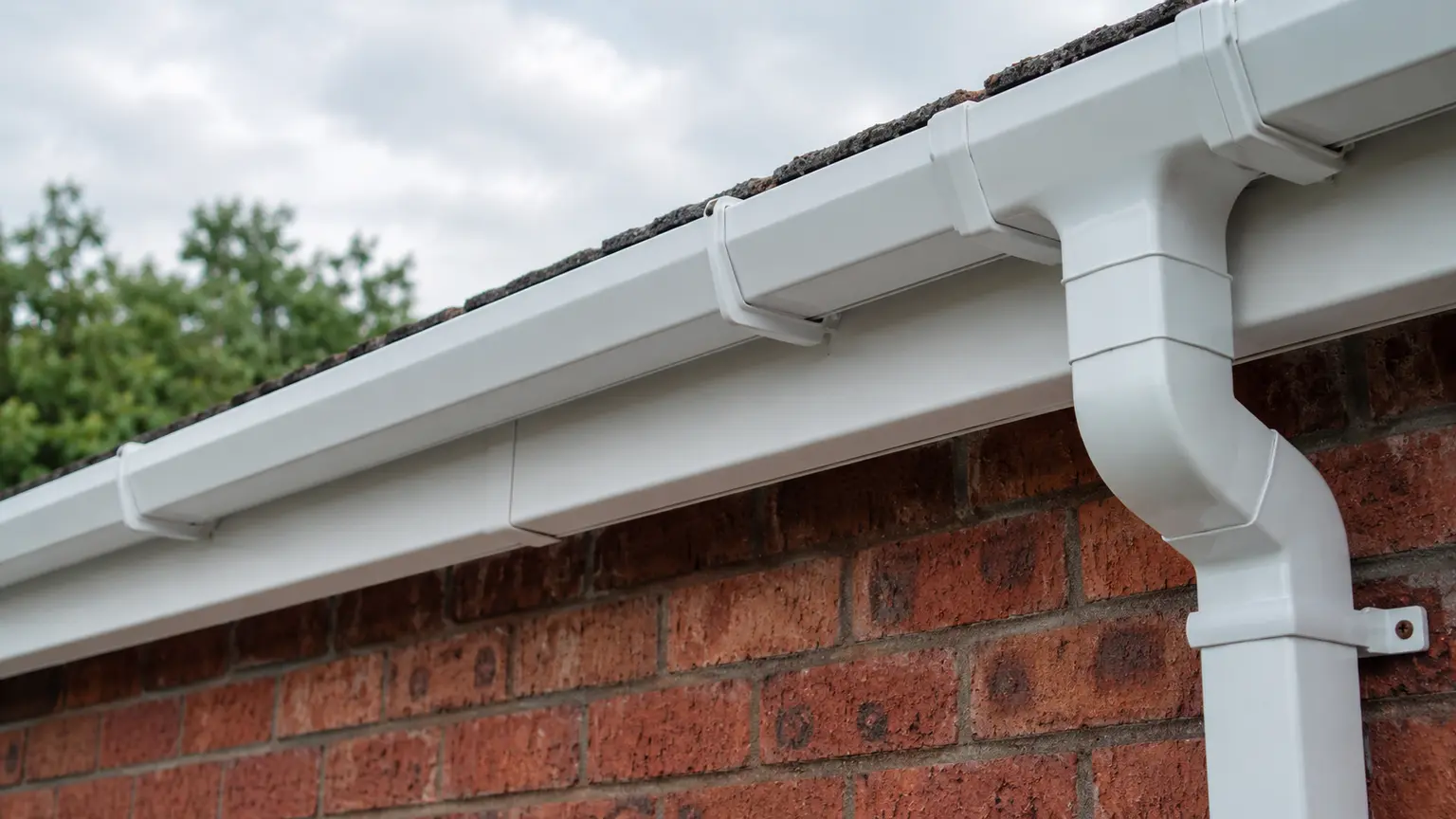
New uPVC fascia and soffit
uPVC has become the default choice for fascia and soffit in Ireland, and for good reason. It is a tough, weatherproof plastic that never rots, never needs painting and holds its colour for decades in the wet, salty Irish air. Where timber fascia has to be sanded and repainted every few years to keep the rot at bay, a uPVC roofline asks for nothing more than the occasional wipe down. A professionally fitted uPVC fascia and soffit lasts 25 to 35 years and comes with a manufacturer guarantee against discolouration and failure.
uPVC boards come in white, woodgrain finishes and a range of colours, with matching trims, corners and ventilation. A roofline fitter removes the old timber, checks and treats the rafter ends, then fixes the new fascia and soffit with a felt support tray at the eaves so water drains into the gutter rather than behind it. It is the strongest all-round choice for any house where low maintenance matters, which is almost every home.
- Never rots, never needs painting
- 25 to 35 year lifespan with a product guarantee
- Holds colour in wet, salty coastal air
- White, woodgrain and colour finishes to match
uPVC vs timber vs capping over
There is no single right answer, only the best fit for your house and budget. Here is how the three roofline options compare at a glance.
| New uPVC | Timber | Capping over | |
|---|---|---|---|
| Lifespan | 25 to 35 years | 15 to 25 years | Limited by timber |
| Maintenance | Wipe down only | Repaint every few years | Low, if timber sound |
| Relative cost | Mid | Higher over time | Lowest |
| Look | Crisp, modern | Traditional, period | Clean uPVC face |
| Best for | Most homes | Period, protected homes | Sound timber on a budget |
For most Irish homeowners replacing a tired roofline, new uPVC offers the best balance of price, lifespan and freedom from painting.
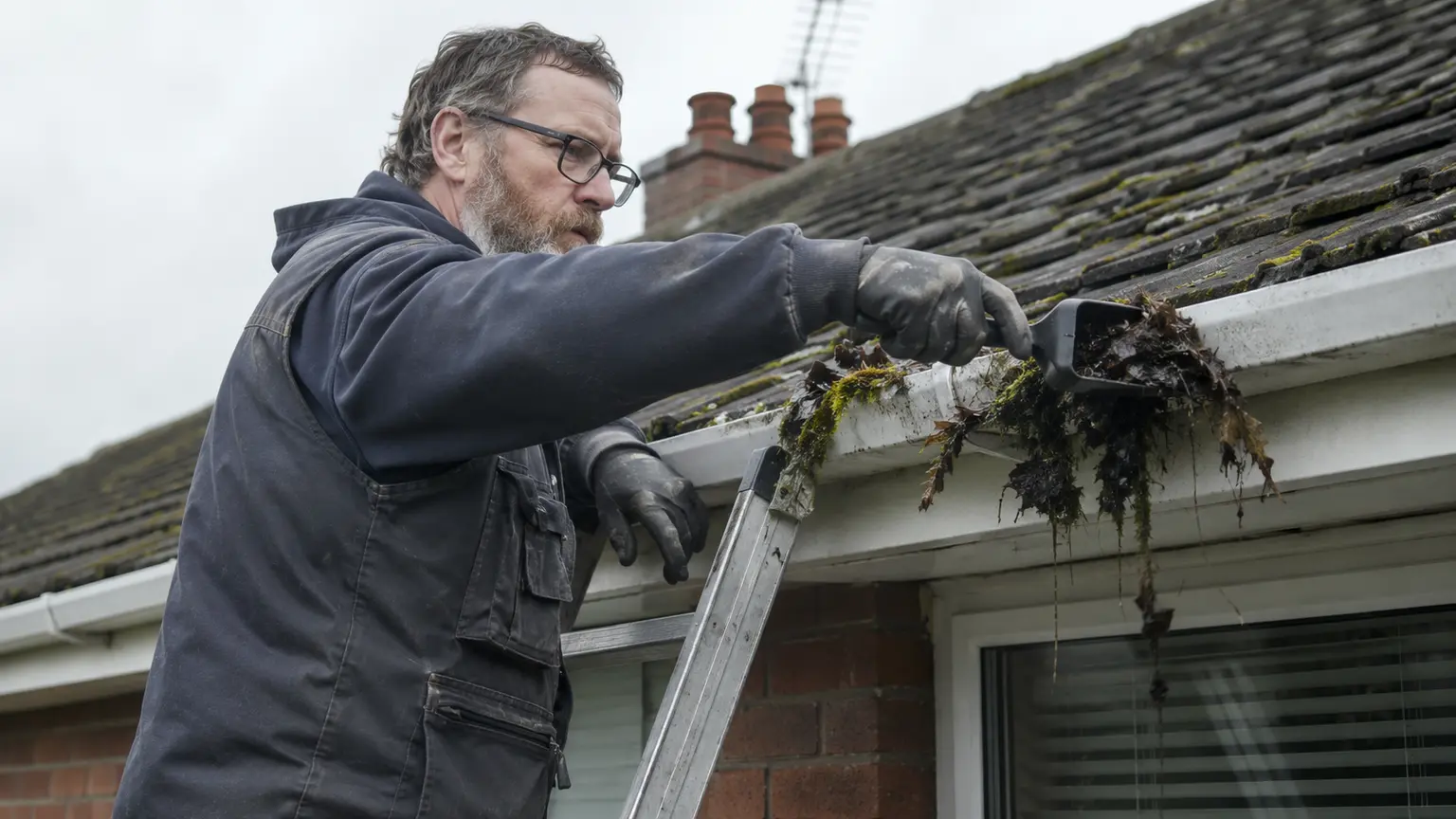
Gutter cleaning vs replacement
Not every gutter problem means a full replacement. Many issues are simple and cheap to put right, buying years of extra life from a roofline that is otherwise sound. Most gutter trouble starts with a blockage: leaves, moss and grit build up in the channel and at the downpipe, so water backs up and pours over the front in heavy rain. A clear-out and reseal of the joints often solves an overflow completely.
The signs that a gutter run has reached the end are harder to fix with a brush. uPVC that has gone brittle and cracked, brackets that have rusted or pulled out of rotten fascia, and a gutter line that sags and ponds between supports all point to replacement rather than repair. A roofer will inspect the full run, test the falls and tell you honestly whether a clean and reseal will hold or whether the money is better spent on a new run that resets the clock for decades.
- Overflowing in heavy rain, usually a blockage
- Brittle, cracked uPVC near the end of its life
- Rusted brackets pulling out of soft fascia
- Sagging line that ponds water between supports
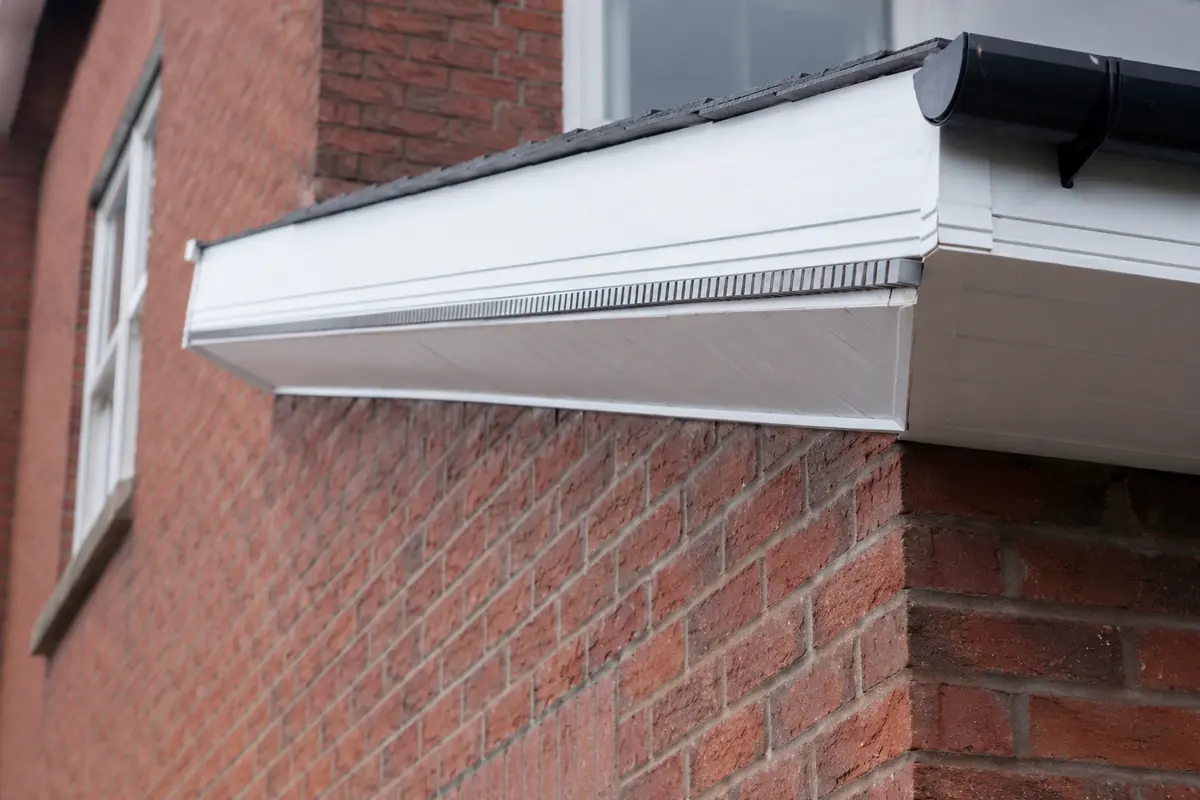
Soffit and over-fascia ventilation
One job the roofline does quietly is ventilate the roof space. A modern, well-insulated loft traps warm, moist air, and if that air cannot escape it condenses on the cold underside of the roof, soaking the timbers and ruining the insulation. The fix is a steady flow of fresh air in at the eaves, and that air comes in through the roofline. A contractor who only replaces the boards without thinking about airflow can leave you with a damp loft and rotting rafters within a few winters.
There are two common ways to ventilate at the eaves. Over-fascia vents sit on top of the fascia, behind the bottom row of tiles, drawing air in just above the gutter. Soffit vents are slots or round vents set into the soffit board underneath, often supplied as a continuous vented soffit strip. A good fitter pairs the vents with felt support trays so the roofing felt does not sag and block the airflow. Getting this right is what keeps the new roofline, and the roof above it, dry and sound.
- Over-fascia vents draw air in above the gutter
- Vented soffits let air flow into the loft
- Felt support trays keep the airway clear
- Stops condensation rotting roof timbers
Replacement, repair and ventilation
Full roofline replacement
The complete job: strip the old timber fascia and soffit back to the rafters, treat the rafter ends, then fit new uPVC fascia, vented soffit and fresh guttering all round. This is the popular choice when the existing roofline is rotten, when the house is being re-roofed, or when a homeowner simply wants to be done with painting for good. It is best done with scaffold up, and many people combine it with a re-roof to share the access cost. Done well, a full uPVC roofline lasts decades and transforms the look of the eaves.
Gutter repair and cleaning
The cheapest and most common roofline job. Clearing leaves, moss and grit from the channel and downpipe, resealing leaking joints, rehanging a sagging run and replacing a cracked length all fall under repair rather than full replacement. A twice-yearly clean, autumn and spring, keeps water draining freely and the walls dry. Many contractors offer a quick gutter clean and inspection as a standalone visit, which is cheap insurance against the damp that overflowing gutters cause.
Soffit ventilation
Adding or upgrading ventilation at the eaves, either as part of a roofline replacement or as a standalone fix for a damp, stuffy loft. A contractor can swap solid soffits for vented strip, fit over-fascia vents, and add felt support trays so air flows freely into the roof space. If you have noticed condensation, mould or damp insulation in the loft, poor eaves ventilation is a likely cause and the roofline is where it is put right.
Why the roofline matters more than it looks
It is easy to overlook the roofline because it sits high up and out of the way, but it is the part of the house that takes the full force of every shower. The fascia and the brackets bolted to it hold up gutters that can carry a surprising weight of water in a downpour, and the whole assembly has to stay rigid and watertight through years of wind and rain. When timber fascia softens, the brackets loosen, the gutter sags, and water that should be channelled away instead runs down the wall. The damage that follows, damp plaster, blown render and rotting window heads, costs far more to put right than the roofline itself.
This is why a roofline replacement is rarely just a cosmetic upgrade. Renewing the fascia, soffit and guttering in one go re-establishes a clean line that sheds water properly, supports the lower edge of the roof, keeps pests out of the loft and lets air flow to prevent condensation. For most homeowners it is also the moment to switch from timber to uPVC and leave the painting behind for good. Whether you need a single sagging gutter rehung or the whole eaves renewed, the contractors in our directory cover the lot, and comparing two or three written quotes is the quickest way to a fair price.
Fascia and guttering cost in Ireland
Indicative 2026 supply-and-fit ranges for an average Irish home. Get a written quote for your exact house, as size, scaffold and the state of the old timber move the final figure.
- Clear blockages and downpipes
- Reseal joints, replace a length
- Average semi-detached house
- New uPVC half-round or ogee
- Complete uPVC replacement
- Price rises with house size
The figures above are a guide. The only way to know what your roofline will cost is a written quote based on a survey, because the size of the house, the number of downpipes, whether scaffold is needed and the condition of the rafter ends all move the price. A bungalow is far cheaper to do than a two-storey detached with awkward access. Sending your details to two or three local roofers and comparing their quotes side by side is the quickest way to a realistic figure, and it costs nothing.
VAT at 13.5 per cent applies to construction services. The main cost variables are whether scaffold is required, the length of roofline, the number of downpipes and corners, and whether any rotten rafter ends need repair before the new boards go on.
Tell us the job, we will get a roofer to you
Choose your county and rated local roofline contractors will come back to you with quotes, usually within 24 hours. No fees, no obligation.
26 counties covered, pick yours to get matched
Choose your county
Select your county to get matched with rated local roofline contractors.
Signs your roofline needs attention
Catching a failing roofline early saves money, because water that reaches the wall or the rafter ends turns a simple refit into a damp and structural repair. Watch for these signs.
Overflowing gutters
Water pouring over the front of the gutter in heavy rain means a blockage or a failed fall.
Peeling fascia paint
Flaking, blistered paint on timber fascia is the first sign of rot taking hold underneath.
Sagging gutter lines
A gutter that dips and ponds between brackets has loose fixings or soft fascia behind it.
Green algae streaks
Green or black streaks running down the wall below a joint mean a leak is soaking the render.
Looking after your gutters and roofline
A uPVC roofline asks for very little, but the small amount it needs makes a real difference. Twice a year, in autumn after the leaves fall and again in spring, clear the gutters and downpipes so water drains freely rather than backing up and pouring over the front. While you are at it, look along the gutter line for dips that hold water, check the joints for drips and the downpipes for splits, and glance at the soffit and fascia for any soft spots, staining or daylight where pests could get in. A gutter clean is cheap, and catching a small leak early stops it soaking the wall behind.
Trees are the roofline's biggest enemy. Overhanging branches drop leaves straight into the gutter and shade the boards so moss and algae take hold, so keeping them trimmed back pays off. If you would rather not be up a ladder, most contractors offer a gutter clean and inspection as a quick standalone visit, and many will flag any small repairs before they become big ones. A roofline that is cleared and checked once or twice a year will quietly do its job for decades, while a neglected one fails early and takes the wall and the loft with it.
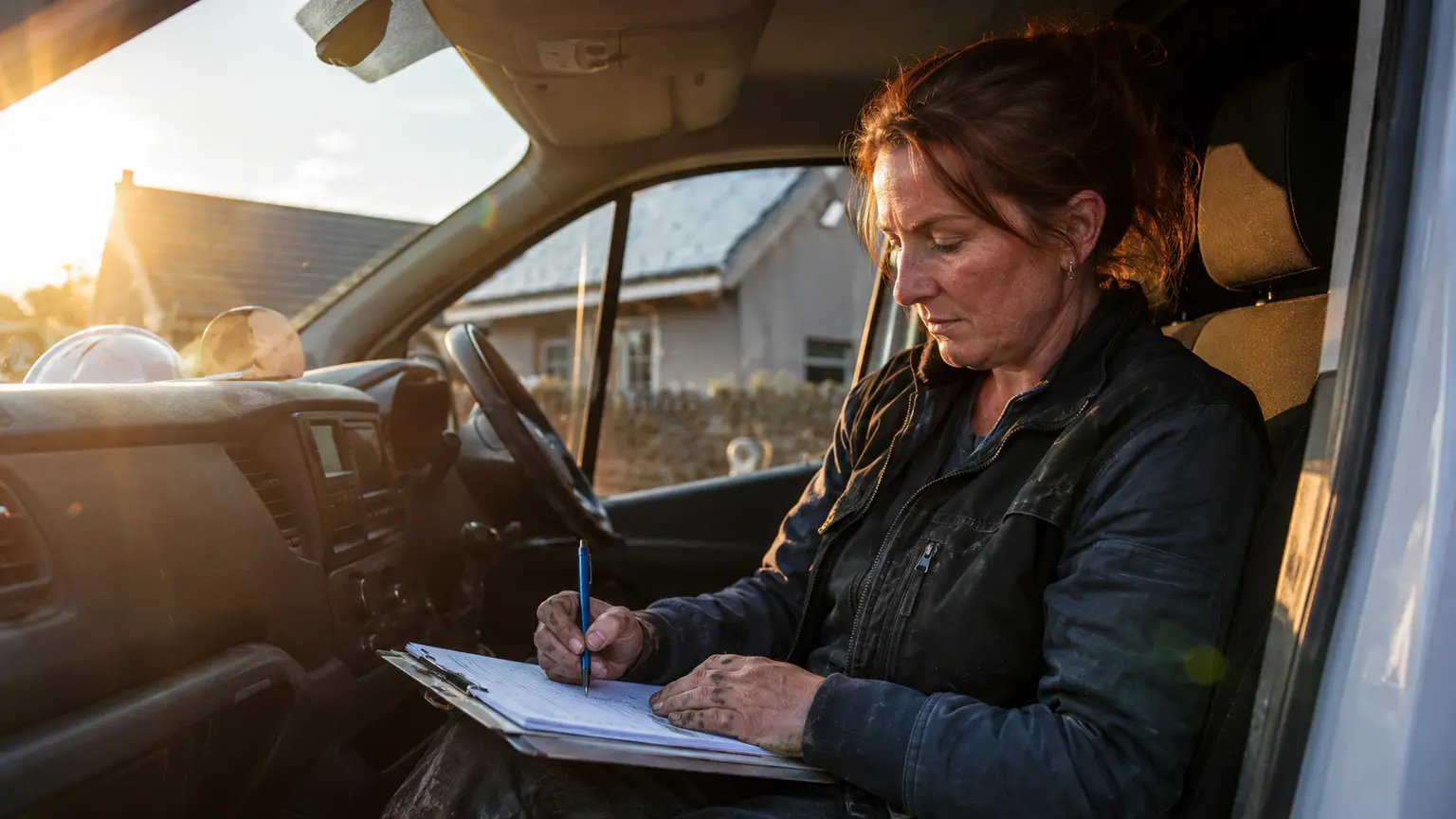
How to choose a roofline contractor
The single biggest factor in how long a new roofline lasts is who fits it. Before you commit, ask for a written, itemised quote that states the uPVC products, the ventilation specification and whether scaffold is included. Check public liability insurance, look at Google reviews, and ask to see fascia and guttering jobs they have completed locally. A reputable contractor surveys the eaves before quoting rather than pricing it sight unseen, and will tell you honestly whether capping over is safe or whether the timber needs full replacement.
Many uPVC manufacturers offer a product guarantee against discolouration and failure, so ask whether your quote includes it and what the workmanship guarantee covers. Be wary of a price that skips ventilation or proposes to cap over rotten timber, as both store up trouble. Comparing two or three quotes side by side is the best way to judge both price and the quality of the contractor, and every roofer in our directory shows their Google rating and review count so you can compare before you call.
- Insist on a written, itemised quote
- Confirm public liability insurance is in place
- Check Google ratings and recent reviews
- Ask whether ventilation is included
- Confirm the uPVC and workmanship guarantees
What to expect when you replace your roofline
From the first survey to handover, a roofline replacement follows a simple, predictable sequence. Here is how a good contractor works, and what happens at each stage so there are no surprises on the day.
Get your survey booked- 1
Survey and measure
The contractor checks the eaves, measures the runs, counts the downpipes and prices the job in writing so there are no surprises later.
- 2
Scaffold and access
Scaffold or a secure access tower goes up so the eaves can be reached safely, especially on a two-storey house. This is one of the main cost variables.
- 3
Strip the old timber
The old fascia, soffit and guttering come off, and the rafter ends are inspected and treated or repaired. This is why capping over rotten timber is a false economy.
- 4
Fit uPVC and guttering
New uPVC fascia and soffit go on with a felt support tray at the eaves, then fresh guttering and downpipes are hung to the correct fall.
- 5
Vents, clean up and guarantee
Soffit or over-fascia vents are fitted, the site is cleared, the old material taken away, and the workmanship and product guarantees handed over in writing.
Get roofline quotes in four steps
Getting quotes from local fascia and guttering contractors takes minutes, not days. Tell us what you need, compare the roofers who come back to you, and choose with no pressure and no fees. Here is how it works from start to finish.
Tell us the job
Clean, repair or full roofline, and your county.
Get matched
See vetted local roofline contractors near you.
Compare quotes
Written quotes, no obligation to proceed.
Choose your roofer
Deal direct, with no middleman fee.
Fascia and guttering questions, answered
How much does fascia, soffit and guttering cost in Ireland?
A gutter clean or small repair typically costs EUR 80 to EUR 250. Replacing the guttering alone runs EUR 500 to EUR 1,200 for an average semi-detached house. A full roofline replacement, meaning new uPVC fascia, soffit and guttering all round, costs roughly EUR 1,500 to EUR 4,000 or more, depending on the size of the house, scaffold and the state of the old timber. VAT at 13.5 per cent applies.
How long does a roofline replacement take?
A full fascia, soffit and guttering replacement on an average house takes one to three days. A straightforward semi-detached job is often done in a day or two, while a larger detached house with awkward access, extra downpipes or rotten rafter ends to repair takes longer. Replacing just the guttering on its own is usually a single-day job.
Is uPVC or timber better for fascia and soffit?
uPVC is the popular choice for most Irish homes because it never rots, never needs painting and shrugs off the wet weather, with a lifespan of 25 to 35 years. Timber gives a traditional look and suits period or protected properties, but it must be painted every few years and will rot if neglected. For low maintenance, uPVC wins.
Do I need to replace the fascia when I re-roof?
It is strongly advised. The fascia carries the guttering and supports the lower edge of the roof, so a re-roof is the natural time to renew it while scaffold is already up. Fitting new tiles or slates onto rotten fascia and soffit is a false economy, and combining the two jobs saves a second round of access costs later.
Can gutters be repaired instead of replaced?
Often yes. Blocked, leaking or sagging gutters can frequently be cleared, resealed or rehung at a fraction of the cost of replacement. Once the guttering is cracked, brittle with age, or the brackets and fascia behind it have failed, replacement is the sensible spend. A roofer will inspect the run and tell you honestly which way is better value.
Do I need ventilation in the soffit?
Yes, roofline ventilation matters. Air must flow into the roof space through the soffit or over the fascia to carry away moisture, otherwise condensation builds up and rots the timbers and ruins insulation. A good contractor fits over-fascia vents or soffit vent strips as part of a roofline replacement, often paired with felt support trays at the eaves.
Is scaffold needed for fascia and guttering work?
For a full roofline replacement on a two-storey house, scaffold or a secure access tower is normally required so the work is done safely and to a good standard. Some single-storey runs and minor gutter repairs can be reached safely from a tower or ladder, but reputable contractors will not strip a full roofline from a ladder. Access is one of the main cost variables.
Do fascia and guttering contractors give a guarantee?
Yes. Reputable contractors provide a workmanship guarantee, usually 5 to 10 years, and many uPVC products carry a separate manufacturer guarantee against discolouration and failure. Always ask what the guarantee covers, get it in writing, and confirm the contractor holds public liability insurance before the work begins.
What are the signs my fascia or guttering needs replacing?
Watch for gutters overflowing in heavy rain, peeling or flaking paint on timber fascia, sagging or uneven gutter lines, and green algae streaks running down the wall below a joint. Damp at the eaves, soft rafter ends or birds nesting behind the soffit are all signs the roofline has failed and needs attention.
Ready to sort your fascia and guttering?
Compare rated roofline specialists in your county, check their Google rating and contact them directly. No middleman, no fees.
Get my free roofline quotes