
Lead work and flashing contractors in Ireland
Leaking around a chimney or failing flashing? Compare 662 rated local specialists for chimney flashing, valley lead and repointing across all 26 counties. Tell us about the job and we will match you with roofers in your county.
Free and no obligation. Most roofers reply within 24 hours.
What do you need a leadworker for?
Pick what brought you here and we will point you to the right local contractors. Every roofer in our directory is rated, reviewed and free to contact.
Lead work and flashing by county
Select your county to see rated leadwork and flashing contractors near you, with phone numbers, Google ratings and opening hours.
What lead work and flashing is, and why it matters
Lead work and flashing is the waterproofing of the junctions where a roof meets something else: a wall, a chimney, a valley between two pitches, a dormer cheek or an abutment against a higher wall. These junctions are where almost every roof leak begins, because tiles and slates alone cannot seal an angle or a change of plane. The flashing is the detail that bridges that gap and throws water back onto the roof, and on a well-built Irish roof it is almost always formed in lead. The contractors in our directory carry out every kind of leadwork, from re-flashing a single chimney to re-leading a valley, repointing perished chimney mortar and forming step, soaker and apron flashings. From leadworkers in Dublin and Cork to roofing specialists in Galway, Limerick and Waterford, there are rated contractors in every county.
Lead is still the gold standard for flashing for good reason. It is malleable, so it can be dressed by hand to fit any shape, profile or course of brick exactly, with no joints or seams to fail. It does not corrode, it tolerates the constant expansion and contraction of an Irish roof through wind, rain and temperature swings, and correctly fitted it carries a working life of well over 100 years. Lead is graded by code: Code 4 (blue) and Code 5 (red) are the weights used for most domestic flashing, with the heavier Code 5 chosen for exposed valleys, longer runs and anywhere extra durability is wanted. No lead-substitute or self-adhesive tape comes close to it for life or reliability.
Use this page to understand the work, get a feel for 2026 prices and shortlist a contractor, then send your details to get quotes back from rated roofers in your county. If your problem is a leak rather than the lead itself, our in-depth roof repairs guide covers finding and fixing leaks across the whole roof. In honesty, leadwork is a craft skill and the quality varies widely, so comparing reviews and getting a written quote matters more here than on almost any other job. Every roofer listed here is a real business with a public Google rating, and we never sell leads or take a cut.
The leadwork on your roof, explained
Leadwork covers every junction on the roof. Here are the four details a leadworker forms most often, and where each one sits.
Chimney flashing
Front apron, side step flashings and a back gutter seal the chimney where it passes through the roof.
Step and soaker flashing
Interleaved soakers and stepped cover lead seal where a pitched roof runs up against a side wall.
Valley lead
A lead-lined channel carries water down the internal angle where two roof slopes meet.
Abutment and apron flashing
Apron and cover flashings seal lean-to roofs, dormers and porches against a higher wall.
Lead vs lead-substitute vs mortar fillet
When a junction needs sealing there are three common approaches. Here is how proper lead compares with the cheaper alternatives.
| Code 4/5 lead | Lead-substitute | Mortar fillet | |
|---|---|---|---|
| Lifespan | 100+ years | 15 to 20 years | 5 to 10 years |
| Look | Weathers to even grey | Matt grey, less crisp | Cracks and crumbles |
| Relative cost | Highest | Mid | Lowest |
| When used | All permanent flashing | Theft-prone or budget runs | Patch only, never new |
| Verdict | The proper fix | Acceptable compromise | Short-term bodge |
For any flashing meant to last, Code 4 or Code 5 lead is the right material. A mortar fillet alone is a repair waiting to fail.
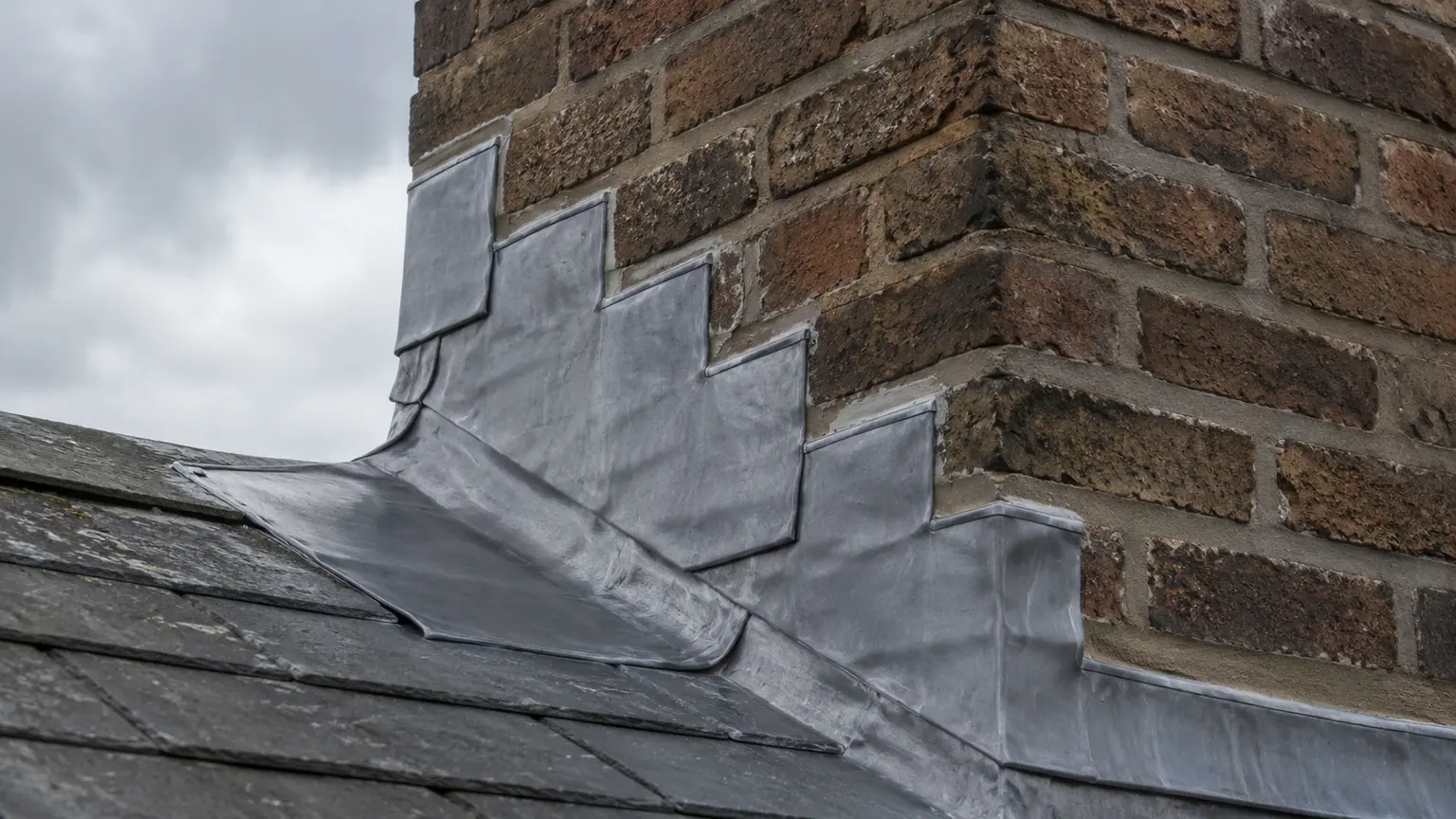
Chimney flashing and why it leaks
The chimney is the single most common source of a roof leak, because it punches through the roof and has to be sealed on all four sides. A proper chimney flashing is several details working together: a front apron that laps onto the tiles below, stepped cover flashings dressed into the brickwork courses on each side, and a back gutter that carries water around the high side of the stack. Each piece is cut, dressed and wedged into raked-out mortar joints, then pointed to lock it in place.
When a chimney leaks, the lead itself is rarely the culprit. The usual causes are a cracked mortar fillet that was used instead of proper stepped lead, perished pointing that has let the lead lift, or a back gutter that was undersized or never formed at all. The tell-tale sign indoors is staining on the chimney breast in an upstairs room or the attic, often appearing well below the actual fault as water tracks down inside the stack.
- Front apron, side steps and back gutter all in lead
- Lead wedged into raked joints, then re-pointed
- Staining on the chimney breast points to the flashing
- Mortar fillets are the classic failed shortcut
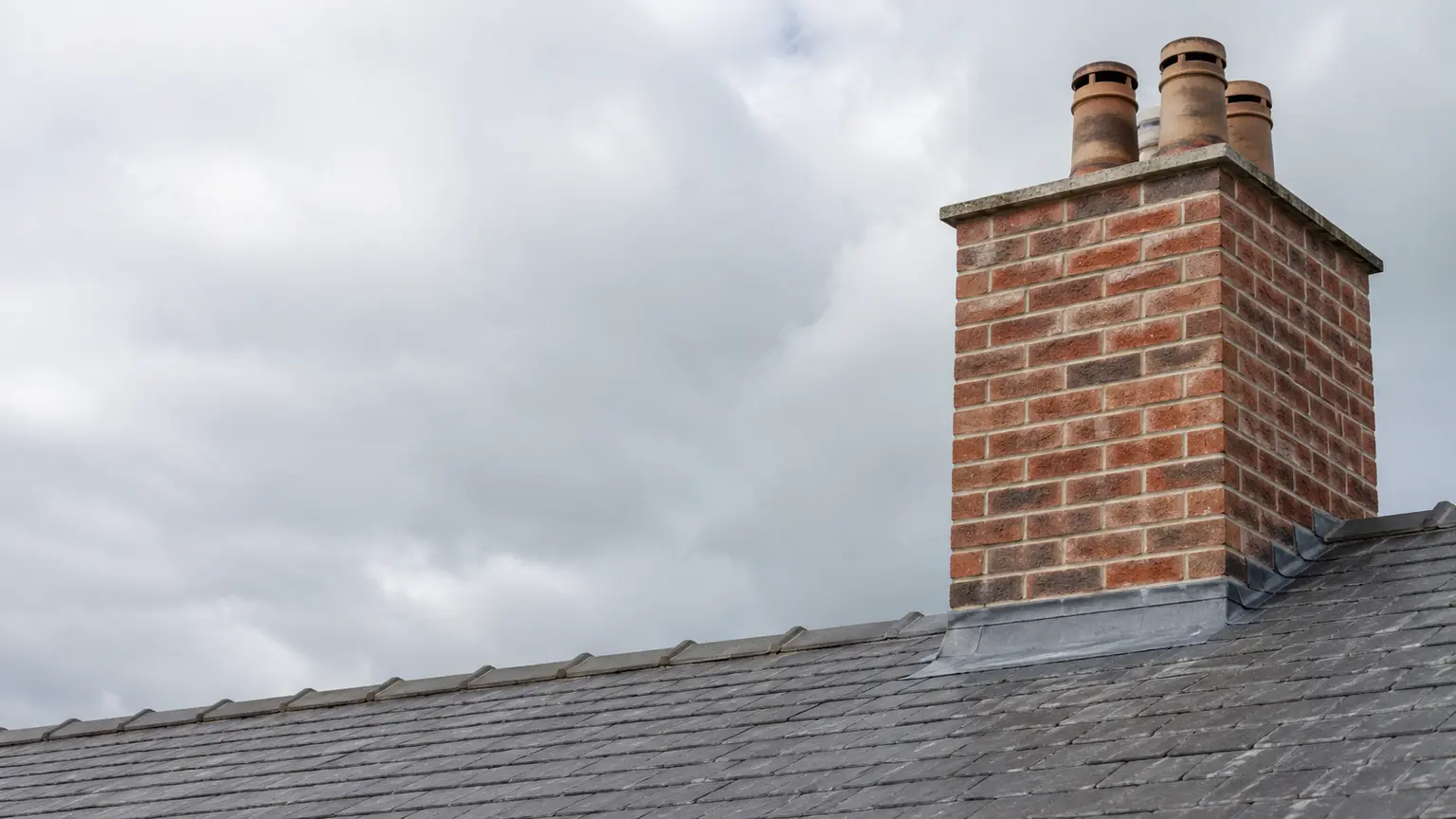
Chimney repointing and new lead
Repointing and re-leading a chimney usually go hand in hand, because both depend on the same brickwork. Over decades the lime or sand-cement mortar between the bricks weathers, cracks and crumbles, which lets water into the stack and loosens the wedges holding the flashing. A leadworker rakes out the perished joints back to sound mortar, brushes them clean, and re-points with a fresh mix matched to the chimney, then dresses in new Code 4 or Code 5 lead and wedges it into the cleaned joints.
Doing both at once makes sense: the scaffold or access is already there, the joints are open, and you end up with a stack that is watertight from the brick out. New lead always needs patination oil, brushed onto the surface as it goes on, to stop the white carbonate staining that fresh lead otherwise runs down over the tiles and render below. Without it, a brand new flashing leaves ugly white streaks within weeks. A good leadworker patinates every new detail as a matter of course.
- Rake out and re-point perished chimney joints
- Match the mortar mix to the existing stack
- New Code 4 or Code 5 lead wedged into clean joints
- Patination oil on all new lead to stop white staining
Valleys, gutters and abutment leadwork
Chimney leadwork
Every face of a chimney has to be flashed: a front apron onto the tiles, stepped cover flashings up each side, and a back gutter behind the stack. This is the most demanding chimney detail to get right, and the one most often botched with a mortar fillet instead of stepped lead. A skilled leadworker forms each piece to suit the brick courses and the pitch, wedges it into raked joints and points it home, then patinates the finished work so it weathers evenly and keeps the stack watertight for decades.
Valley and gutter lead
A valley is the internal angle where two roof slopes meet, and it carries a large volume of water, so it needs a hard-wearing lead lining laid over boards with the correct laps and a generous Code 5 weight. Open lead valleys are the traditional Irish detail and, done well, last the life of the roof. Box gutters behind parapets and between roofs are lined the same way. Both fail when the lead is undersized, the laps are too short or the boards beneath have rotted, so re-leading is a common repair on older roofs.
Repointing and flashing repairs
Not every leadwork job is a full replacement. Lifted lead can be re-dressed and re-wedged, an open mortar joint can be raked out and re-pointed, and a cracked mortar fillet can be cut out and replaced with proper stepped lead. Where the lead is sound but the pointing has failed, a targeted repair restores the junction for a fraction of the cost of a full re-lead. A leadworker will inspect the detail and tell you honestly whether a repair will hold or whether the lead has reached the end of its life.
Step flashing, soakers and abutments
Where a pitched roof runs up against a side wall, such as a lean-to extension, a porch or a dormer cheek, the junction is sealed with step flashing and soakers working together. A soaker is a small piece of lead tucked under each tile or slate course and turned up against the wall, and the stepped cover flashing is dressed over the top of the soakers and into the brickwork joints. The two interleave so water is always thrown back onto the roof, never behind the wall, and the result is a neat stepped line of lead climbing the abutment.
An abutment or apron flashing seals the lower edge where a flat or shallow roof meets a higher wall, with the lead dressed up the wall and tucked into a chase or joint. These details look simple but reward experience, because the laps, the depth into the wall and the way the lead is dressed all decide whether the junction stays dry. When a lean-to or dormer leaks, the abutment flashing is usually the first thing a leadworker checks, and re-forming it in proper lead is the lasting fix.
2026 leadwork and flashing costs in Ireland
Indicative 2026 supply-and-fit ranges for the most common leadwork jobs. Get a written quote for your exact roof, as chimney size, height and access move the final figure.
- Re-point and re-dress lead
- Single accessible stack
- New Code 5 lead lining
- Boards checked and renewed
- All new lead flashing
- Rake out and re-point stack
The figures above are a guide. The only way to know what your leadwork will cost is a written quote based on a survey, because the chimney size, the height and access, whether scaffold is needed and the amount of brickwork to re-point all move the price. Sending your details to two or three local roofers and comparing their quotes side by side is the quickest way to a realistic figure, and it costs nothing.
VAT at 13.5 per cent applies to construction services. The main cost variables are whether scaffold is required, the height and access of the chimney, the weight and quantity of lead, and how much pointing the brickwork needs.
Tell us the job, we will get a roofer to you
Choose your county and rated local leadworkers will come back to you with quotes, usually within 24 hours. No fees, no obligation.
26 counties covered, pick yours to get matched
Choose your county
Select your county to get matched with rated local leadworkers.
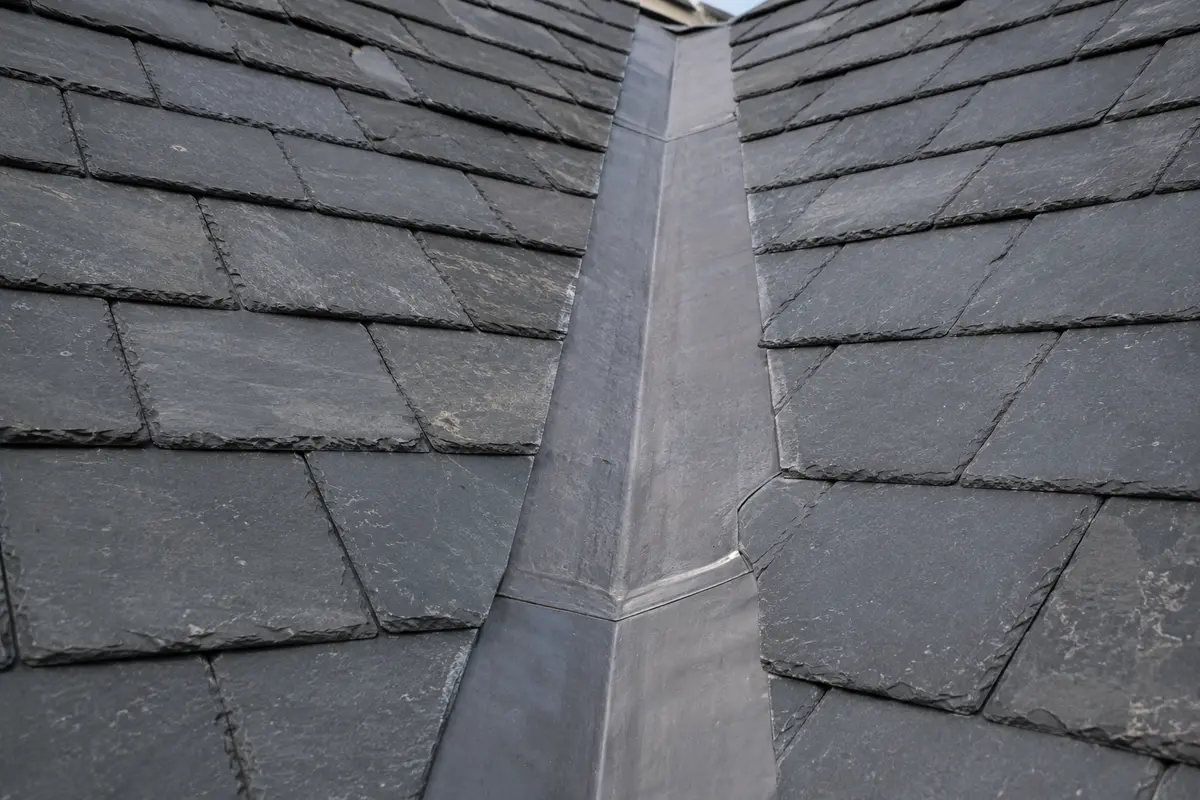
Valley lead and signs of failed flashing
A lead valley takes more water than any other part of the roof, so it is laid in heavier Code 5 lead over boards, in lengths with proper overlapping laps to allow for thermal movement. When a valley fails it is usually because the lead was undersized, the laps were too short, or the boards beneath have rotted and let the lead drop. The result is water finding its way under the tiles either side, often showing as damp in the rooms below long before anyone spots the problem on the roof.
The warning signs of failed flashing are worth knowing. Staining on the chimney breast inside is the classic sign of a chimney leak. Damp or running water in a valley after heavy rain points to failed valley lead. Cracked, crumbling mortar fillets anywhere on the roof are a sign that proper lead was skipped, and they will keep failing until replaced. White streaks running down render or tiles below new lead mean the patination oil was missed. Catching any of these early keeps a flashing repair from turning into a damaged ceiling and rotten timber.
- Staining on the chimney breast inside the house
- Damp or leaks in a valley after heavy rain
- Cracked, crumbling mortar fillets on the roof
- White streaks where new lead missed its patination oil
Signs your flashing has failed
Catching failed flashing early saves money, because water that tracks past a chimney or valley reaches ceilings and timbers fast. Watch for these signs.
Damp on the chimney breast
Staining or damp on the chimney breast indoors is the classic sign of failed chimney flashing.
Cracked mortar fillets
Cracked, crumbling mortar fillets mean proper stepped lead was skipped and water is getting in.
Lifting or split lead
Lead that has lifted from its joints or split with age lets water track straight behind it.
Staining in valleys
Damp or running water in a valley after heavy rain points to undersized or failed valley lead.
Patination oil and looking after new lead
New lead needs a little care to look right. The moment fresh lead meets rain it reacts and forms an uneven white carbonate film on the surface, which then washes down and stains the tiles, slates or render below in unsightly white streaks. The fix is patination oil, a thin oil brushed onto the lead as it is fitted, which seals the surface and lets the lead weather slowly and evenly to a uniform grey. Any leadworker worth hiring applies it to every new detail without being asked.
Beyond that first treatment, lead asks for almost nothing. There is no painting, no sealing and no annual maintenance, which is exactly why it lasts a century or more. The only things that shorten its life are poor fitting in the first place, such as runs that are too long without proper laps, joints that were never pointed, or a mortar fillet used where stepped lead belonged. Get the leadwork right at the start and it will outlast the roof covering around it, which is what makes proper lead such good value over time.

How to choose a leadworker
Leadwork is a craft skill and the standard varies more than on almost any other roofing job, so who carries it out matters. Before you commit, ask for a written, itemised quote that states the lead code being used, the work included and how the chimney or valley will be accessed safely. A good leadworker uses proper Code 4 or Code 5 lead and stepped flashings, never a mortar fillet as a finished detail, and always patinates new lead.
Check public liability insurance, look at Google reviews, and ask to see chimneys or valleys they have re-leaded locally. Be wary of any quote that proposes flashband or a thick smear of mortar as the fix, because both are short-term patches dressed up as repairs. Comparing two or three quotes side by side is the best way to judge both price and the quality of the contractor, and every roofer in our directory shows their Google rating and review count so you can compare before you call.
- Insist on a written, itemised quote
- Confirm the lead code, Code 4 or Code 5
- Confirm public liability insurance is in place
- Check Google ratings and recent reviews
- Avoid quotes built on flashband or mortar fillets
What to expect from a leadwork job
From the first inspection to the finished, patinated lead, a leadwork job follows a simple, predictable sequence. Here is how a good contractor works, and what happens at each stage so there are no surprises on the day.
Get your inspection booked- 1
Inspection and written quote
The leadworker checks the chimney, valley or abutment on site, identifies the real source of the leak, and prices the job in writing.
- 2
Scaffold and safe access
A chimney sits at the highest point of the roof, so scaffold or a chimney scaffold is set up for safe, stable access before any leadwork begins.
- 3
Strip old flashing
The old lead, any mortar fillets and failed pointing are carefully stripped out, and the brick joints are raked back to sound mortar.
- 4
Dress and fit new lead
Fresh Code 4 or Code 5 lead is cut, dressed by hand to fit the brick courses and pitch, then wedged into the cleaned joints.
- 5
Point and patinate
The joints are re-pointed to lock the lead in place, patination oil is brushed on to stop white staining, and the site is left clean.
Get leadwork quotes in four steps
Getting quotes from local leadworkers takes minutes, not days. Tell us what you need, compare the roofers who come back to you, and choose with no pressure and no fees. Here is how it works from start to finish.
Tell us the job
Chimney, valley or abutment, and your county.
Get matched
See vetted local leadworkers near you.
Compare quotes
Written quotes, no obligation to proceed.
Choose your roofer
Deal direct, with no middleman fee.
Leadwork and flashing questions, answered
How much does chimney flashing cost in Ireland?
Re-pointing and re-flashing a single chimney typically costs between EUR 300 and EUR 700 in Ireland, depending on chimney size, height and access. A full chimney leadwork and repoint, replacing all the lead and raking out and re-pointing the brickwork, runs from EUR 800 to EUR 1,800. Scaffold, if needed, is the main variable.
How long does lead flashing last?
Code 4 and Code 5 lead flashing, correctly dressed and pointed, lasts well over 100 years, which is why it is still the gold standard for roof junctions. The lead itself rarely fails. Most leaks at a chimney or abutment come from cracked mortar fillets or lifted flashing, not the lead.
Is lead better than flashband for flashing?
Yes. Lead is dressed to shape, lasts a century or more, and is the proper material for any permanent flashing. Flashband and similar self-adhesive tapes are a short-term patch that lifts and fails within a few years in the Irish weather. A reputable roofer uses flashband only as an emergency stopgap, never as a finished repair.
Can lead flashing be repaired or does it need replacing?
Often it can be repaired. Lifted lead can be re-dressed and re-wedged, and an open joint can be re-pointed. If the lead is split, fatigued or undersized for the gap it spans, replacing it with new Code 4 or Code 5 lead is the lasting fix. A leadworker will inspect and advise which is sensible for your roof.
Why is my chimney leaking?
The most common cause is failed flashing where the chimney meets the roof. Cracked mortar fillets, lifted or split lead, and perished pointing all let water track down inside the chimney breast. Damp patches on the chimney breast indoors usually point to the flashing or the chimney itself rather than the roof tiles.
Do I need scaffold for chimney leadwork?
Often yes. A chimney sits at the highest point of the roof, so safe access usually means scaffold or a chimney scaffold rather than ladders alone. Some lower or accessible chimneys can be worked from a roof ladder, but a reputable roofer will price the safe access the job needs rather than cutting corners at height.
Is lead theft a risk on my roof?
Lead theft does happen in Ireland, mainly from churches and larger buildings with accessible flat lead. On a typical house, flashing lead is dressed into junctions and far less of a target. A roofer can apply anti-theft markings or use lead-substitute on exposed runs where theft is a genuine concern in your area.
Why does new lead need patination oil?
Fresh lead reacts with rain and forms an uneven white carbonate staining that can run down and mark tiles, render or brickwork below. Patination oil applied to new lead seals the surface, prevents that white run-off, and lets the lead weather to an even grey. A good leadworker patinates every new lead detail as standard.
Do leadworkers give a guarantee?
Yes. Reputable leadworkers and roofers in Ireland provide a workmanship guarantee on flashing and leadwork, typically 10 to 20 years, because correctly dressed Code 4 or Code 5 lead lasts far longer than that. Always ask what the guarantee covers and get it, along with the quote, in writing before work starts.
Ready to sort your flashing?
Compare rated leadwork and flashing specialists in your county, check their Google rating and contact them directly. No middleman, no fees.
Get my free flashing quotes