
What are fascia, soffit and guttering?
Fascia boards
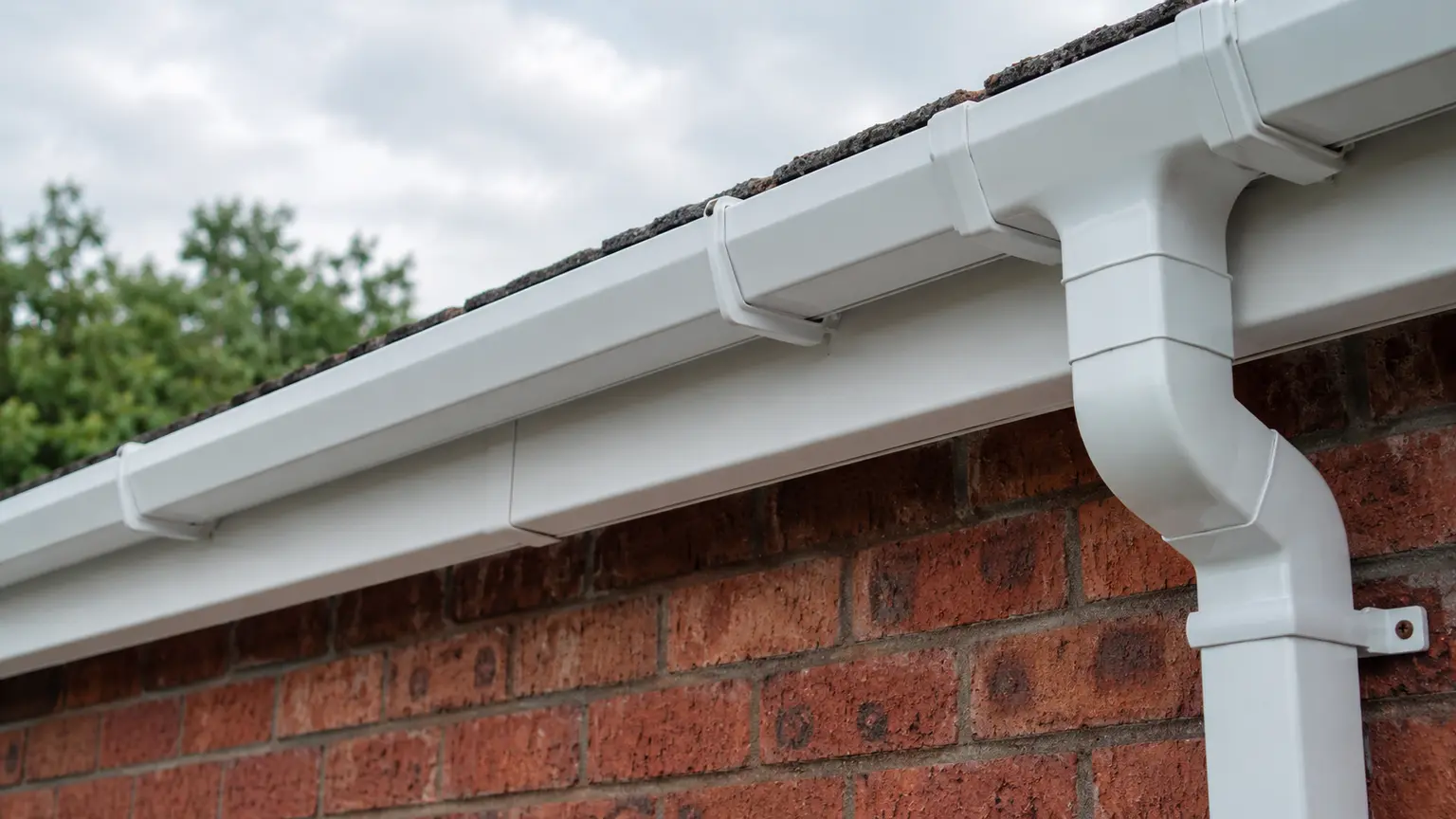
The fascia is the vertical board that runs along the bottom edge of the roof at eaves level. It carries the guttering brackets and closes the roof at the eaves, preventing birds, bats and moisture from entering the roof space. On older Irish houses built before the 1980s, fascia boards are typically timber: painted softwood that requires periodic maintenance. On new builds and properties that have been renovated in recent decades, uPVC is now almost universal.
A failing fascia board is more than a cosmetic problem. If the board rots or pulls away from the rafter ends, the guttering it supports pulls with it, directing rainwater onto the wall rather than into the downpipe. Water then tracks down the external wall and can cause penetrating damp inside the house.
Soffit boards
The soffit is the horizontal board that spans from the fascia board back to the external wall, closing the gap beneath the overhanging eaves. Ventilated soffits have a continuous slot or individual circular vents that allow air into the roof space, which is essential for preventing condensation and timber decay in cold roofs.
Many Irish homes built in the 1970s and 1980s have no soffit ventilation at all. This was poor practice even at the time, and unventilated roof spaces are a common cause of damp timbers and mould growth in attics. Retrofitting ventilation into existing soffits is possible and worthwhile when the fascia and soffit are being replaced.
Guttering and downpipes
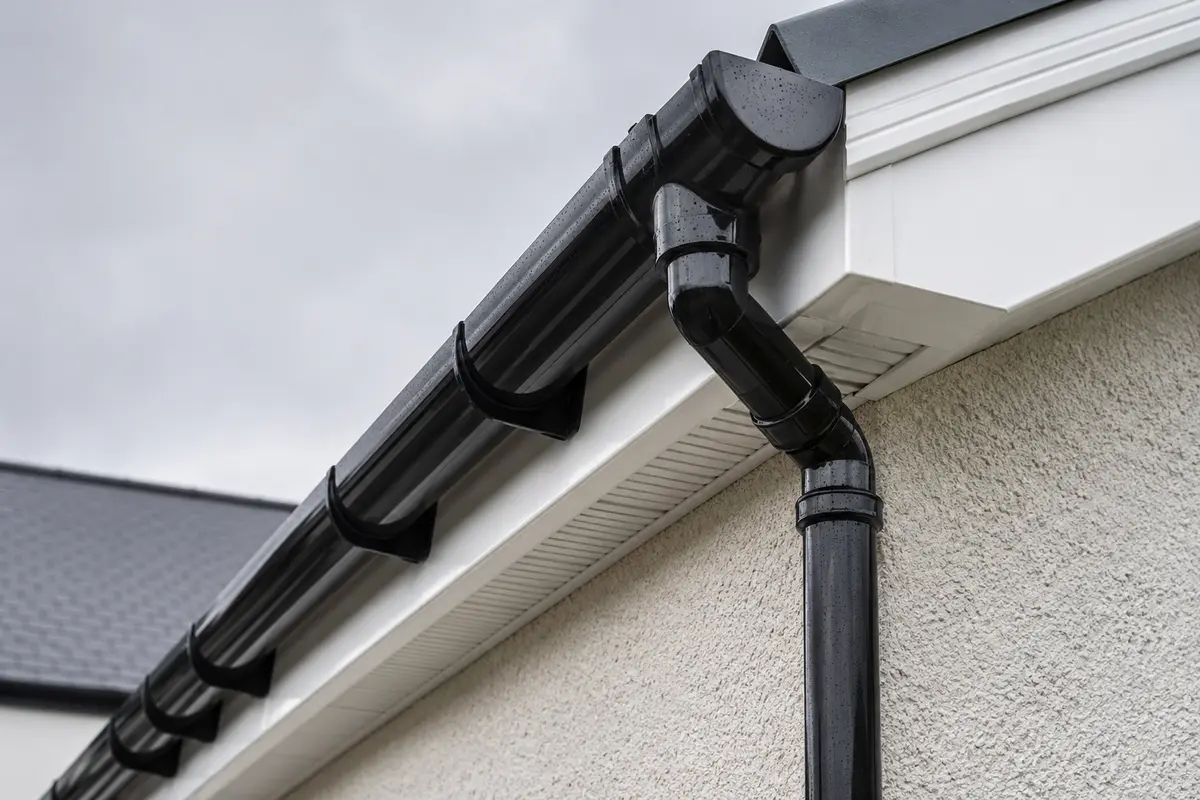
Gutters collect rainwater from the roof surface and channel it to downpipes that carry the water to drains or a soakaway. Half-round, ogee (S-profile) and square-profile gutters are the most common types in Ireland. The standard gutter size on terraced and semi-detached houses is 112mm half-round, which handles the rainfall intensity experienced in most of the country. Larger detached houses, commercial properties and buildings with steeply pitched roofs or large roof areas need 150mm gutters or larger to handle peak flow rates.
Downpipes connect the gutter to ground-level drainage. In older Irish houses, downpipes often connect to combined drains that carry both rainwater and foul water. Modern building regulations require separate rainwater drainage, but older properties typically retain the combined system. If the gutter itself is clear but water still backs up, the blockage is usually below ground in the drain, and that is where a gutter and drainage specialist takes over from the roofer.
uPVC versus wood versus aluminium
uPVC is by far the most common material for fascia, soffit and guttering on Irish homes today. It requires no painting, resists rot and insects, and carries a design life of 20-30 years. It is available in white, black, grey, rosewood grain and other colours and profiles to suit most house types.
Timber fascia and soffit is still the appropriate choice for period properties, conservation areas and listed buildings where the local authority or conservation officer requires traditional materials. Painted softwood needs repainting every five to seven years and is susceptible to rot if water gets behind the paint film, but it can be repaired and maintained indefinitely with proper care.
Aluminium fascia and guttering is a premium option that is growing in popularity, particularly on architect-designed homes and contemporary extensions. Powder-coated aluminium carries a design life of 40-50 years, does not fade or discolour over time, and is available in any RAL colour. For conservation areas or period terraced houses in Dublin or Cork where uPVC would be inappropriate but timber is impractical, aluminium is an excellent middle ground.
Signs your fascia and guttering need attention
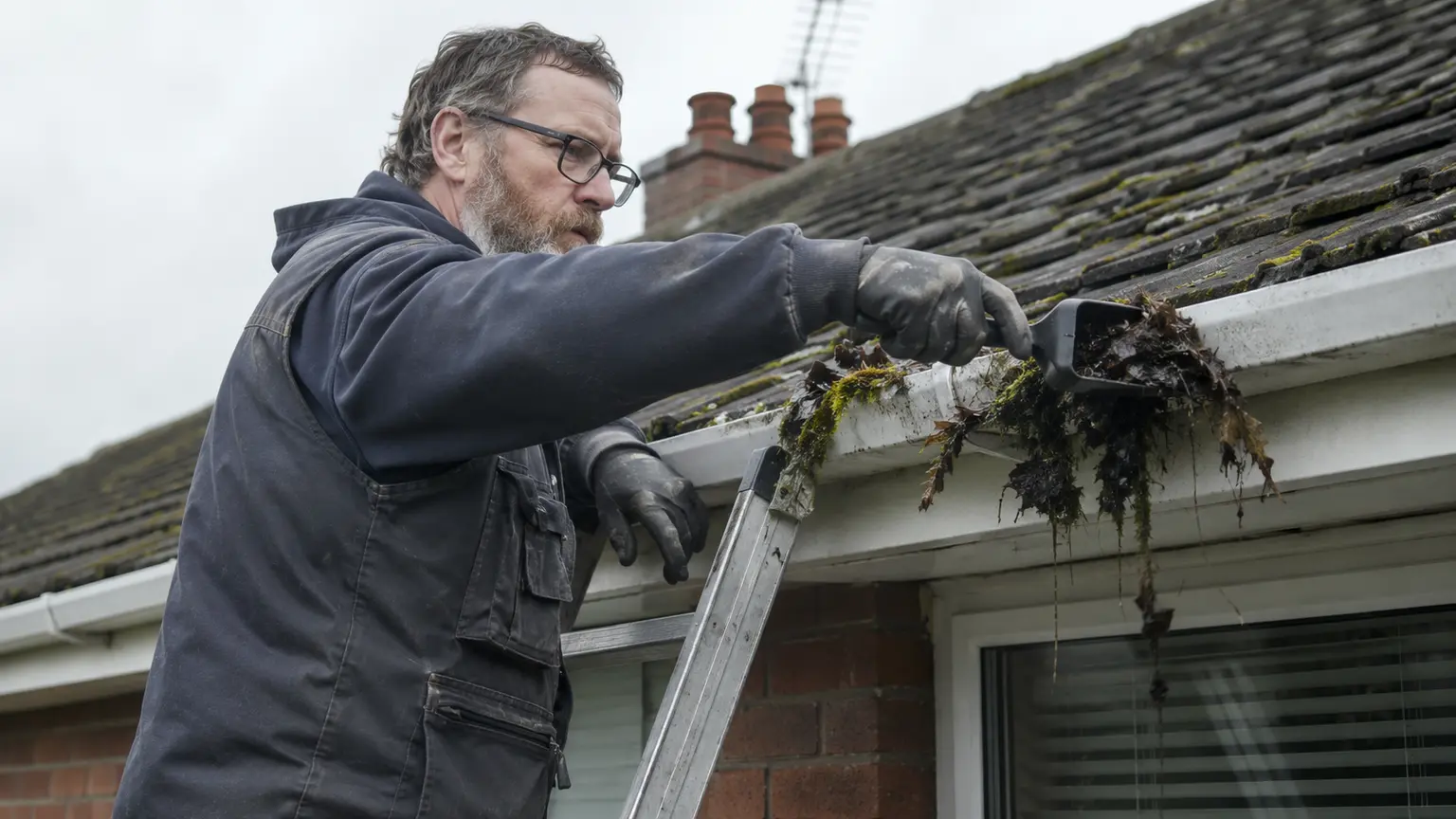
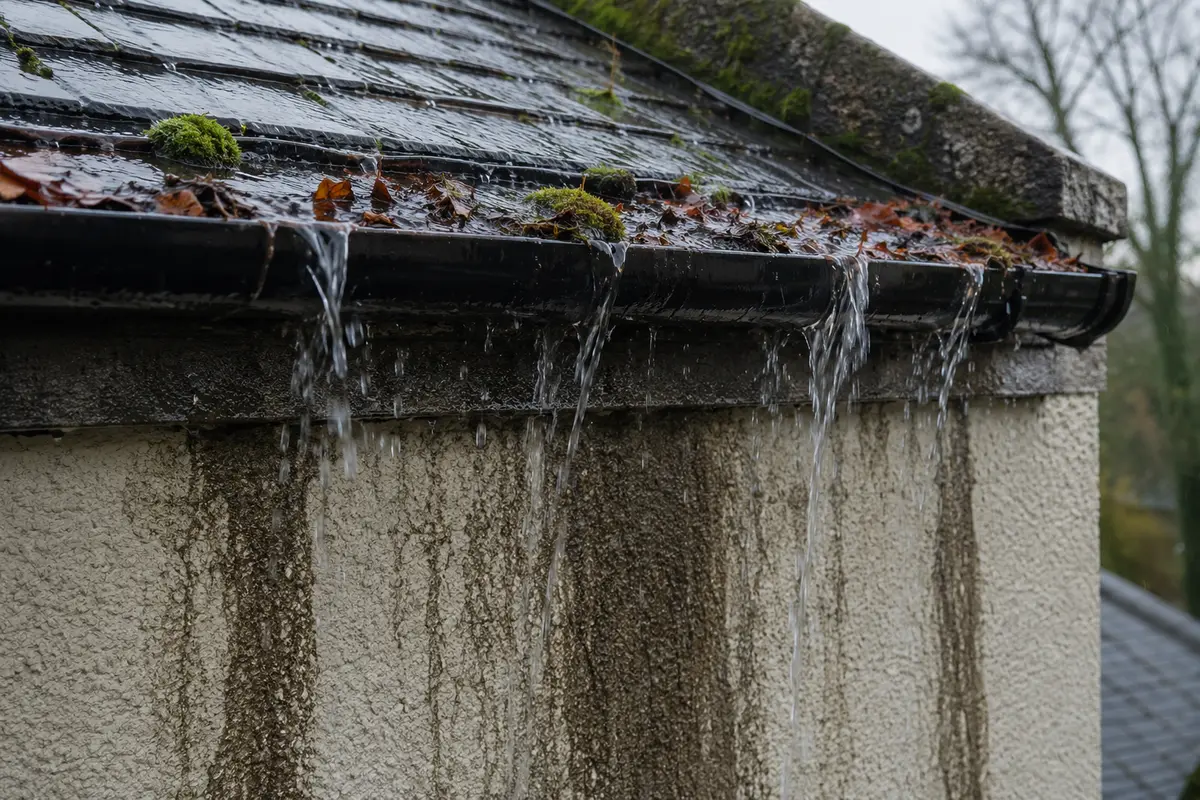
Most fascia and gutter problems are visible from the ground if you know what to look for. Water dripping behind the gutter during heavy rain indicates the gutter has pulled away from the fascia board or the gutter seal has failed. Damp patches on external walls below roof level that appear after rain suggest a blocked or leaking gutter is allowing water to spill down the wall.
Staining or green growth on the fascia board or soffit indicates water is getting behind the boards, which usually means the gutter is overflowing or the drip edge detail is failing. Sagging or bowing sections of gutter mean the support brackets have corroded or the gutter itself has become too heavy with debris. Fascia boards that flex visibly or feel soft when pressed suggest the timber has rotted behind the surface: this is a structural issue that needs immediate attention, as the guttering it supports is at risk of falling. Visible moss, leaves or debris in gutters from ground level is a clear sign the gutter needs cleaning.
Fascia and guttering costs in Ireland
Full replacement of fascia, soffit and guttering in uPVC on a standard semi-detached house costs EUR 1,800-3,500 in 2026, depending on house size, access and whether ventilated soffit is being fitted. For the same house in aluminium, expect EUR 3,000-5,500. These prices include all materials, scaffold or tower access, and waste removal.
Replacing guttering only, without touching the fascia and soffit, costs EUR 600-1,400 for a semi-detached in half-round uPVC. A single gutter cleaning visit costs EUR 120-250. Fascia and soffit replacement is most cost-effectively done at the same time as re-roofing, since scaffold is already in place and the labour saving is significant. If a roofer is on your roof anyway, ask them to assess the condition of the fascia and guttering while they are there.
Gutter maintenance
Gutters should be cleaned at least once a year, ideally in late autumn after the leaves have fallen. A blocked downpipe is easy to test: pour a bucket of water into the top and watch whether it exits freely at the bottom. If it does not, the pipe is blocked and needs rodding or dismantling. Check that gutters fall correctly towards the downpipe: water pooling in mid-run indicates a bracket has dropped or the gutter has sagged. A spirit level along the gutter run will confirm whether the fall is correct.
Leaf guards fitted inside gutters can significantly reduce the frequency of cleaning needed, but they are not a permanent solution: moss, grit and fine debris still accumulate and the guards themselves need checking annually. Blocked gutters are one of the leading causes of rising damp and penetrating damp in Irish homes, making gutter maintenance one of the highest return-on-investment jobs a homeowner can do.