
Emergency roof repairs in Ireland
Active leak or storm damage right now? Find a rated local roofer near you and get an emergency callout to make your roof safe. We connect you with 662 roofers across all 26 counties so you can ring round and get help fast.
Free to use and no obligation. Connects you to local roofers fast.
What is your roofing emergency?
Tell us what has happened and we will point you to rated local roofers who can come out. Every roofer in our directory has a public Google rating and is free to contact directly.
Emergency roofers by county
Select your county to see rated local roofers near you, with phone numbers, Google ratings and opening hours, so you can ring round and get out to you fastest.
Fast help when your roof lets water in
When a roof fails suddenly the priority is simple: stop the water and make the roof safe, then sort the permanent repair once the panic is over. A roofing emergency is anything that lets water in or puts people at risk. Storm damage that strips slates and tiles, a sudden leak pouring through the ceiling, a fallen tree or branch resting on the roof, or slipped slates that leave the roof exposed to the next downpour all count as urgent. Ireland gets its share of named storms and Atlantic gales, and a single bad night can take the covering off a roof, so knowing how to get help quickly matters.
This is a directory, not a 24 hour call centre, and we want to be honest about that. What it does is get you to a rated local roofer fast. You pick your county, see the roofers near you with their phone numbers and Google ratings, and ring round until you find the one who can attend soonest. After a big storm every roofer is busy at once, so the realistic timeline for a make-safe visit is same day to a few days depending on where you are. From emergency roofers in Dublin and Cork to storm damage specialists in Galway, Limerick and Waterford, there are rated contractors in every county ready to make a roof watertight.
Use this page to understand what to do in the first hour, what a make-safe visit involves, what it is likely to cost, and how to avoid the storm chasers who prey on worried homeowners. For non-urgent fixes, slipped slates or a small leak that is not actively flooding, our roof repairs service and our in-depth roof repairs guide walk through the options in full. Every roofer listed here is a real business with a public Google rating, and we never sell leads or take a cut.
What to do right now while you wait
A few simple steps in the first hour protect your home and your safety until a roofer arrives. Do these from inside, never from the roof.
Stay safe indoors
Keep everyone clear of any sagging ceiling, and switch off the circuit at the fuse board if water is near light fittings or wiring.
Contain the water
Put buckets under the drips and move furniture, electronics and valuables clear before the water spreads across the ceiling.
Do not climb up
Never go onto a wet, storm-hit roof or up a ladder in wind. Working at height in a storm is for an experienced roofer, not a homeowner.
Photograph the damage
Take clear photos of the damage and any ruined contents for your insurance claim before anything is moved or repaired.
If a ceiling is bulging with trapped water, a careful small pierce over a bucket can release it safely and stop the whole ceiling coming down.
Make-safe vs permanent repair vs replacement
An emergency rarely means the whole roof is finished. Here is how the three stages compare so you know what you are paying for and when each is needed.
| Make-safe (temporary) | Permanent repair | Full replacement | |
|---|---|---|---|
| What it does | Stops water getting in | Fixes the actual fault | Renews the whole roof |
| How fast | Same day to days | Days to a week or two | Several days plus planning |
| Rough cost | EUR 150 to 600 | EUR 400 to 2,000+ | EUR 5,000+ |
| When needed | Active leak or exposed roof | After the roof is safe | Widespread storm damage |
| Lasts | Days to weeks | Years | Decades |
In an emergency the make-safe always comes first. It buys time so the permanent repair can be planned, quoted and carried out in dry, safe conditions.
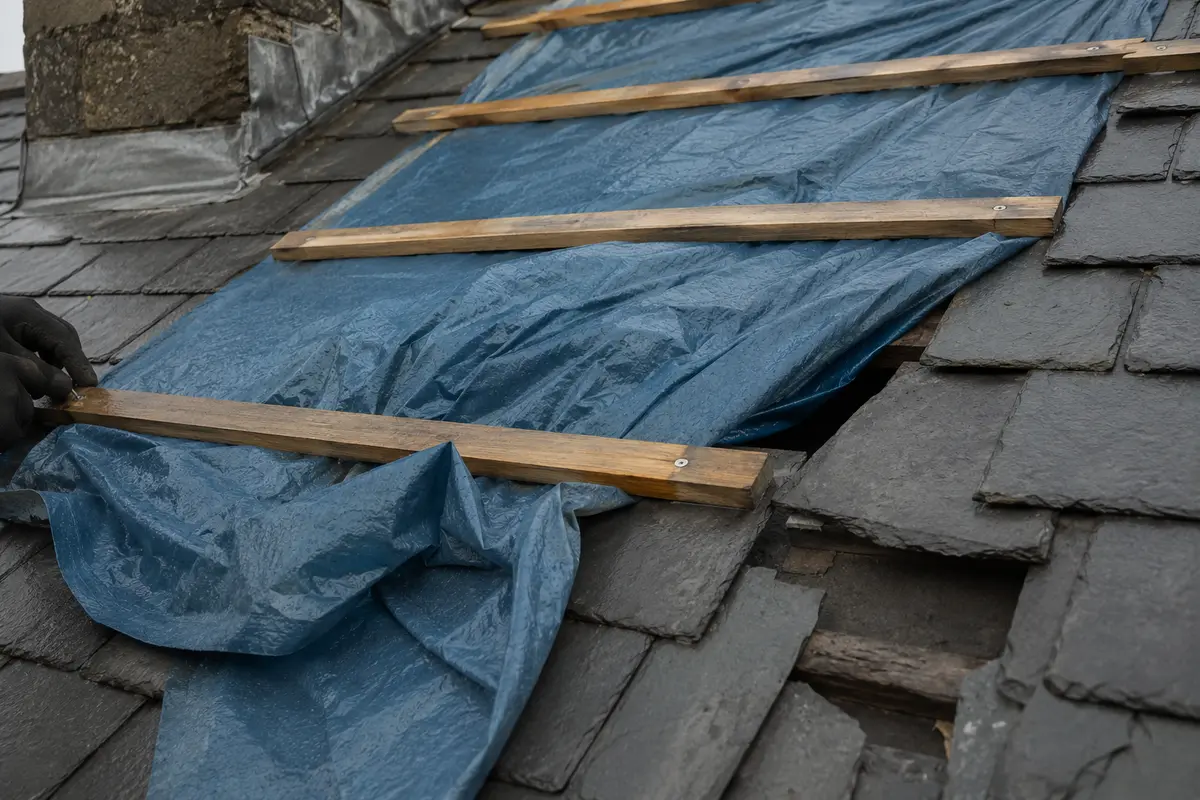
The make-safe and tarpaulin cover
The first job in any roofing emergency is to make the roof safe and watertight, not to fix it properly. A roofer arrives, makes the area secure, and fits a temporary cover so no more water gets in. On a stripped or holed roof that usually means a heavy-duty tarpaulin battened down securely over the damage, sealed at the edges and weighted or fixed so the next gust does not tear it off. On a smaller fault it might be a temporary patch or a few slates slipped back into place.
A make-safe is skilled, weather-exposed work at height, which is exactly why it should never be a DIY job in a storm. An experienced roofer can fit a tarpaulin even in the rain, because stopping the water is the whole point of the visit. Once the roof is covered and the immediate risk is gone, the pressure is off. The permanent repair can then be assessed, quoted in writing and carried out later in dry, safe conditions rather than rushed in the middle of a gale.
- Secures the area and stops further water ingress
- Heavy-duty tarpaulin battened down over the damage
- Can be fitted in wet weather to buy you time
- Permanent repair planned once the roof is safe
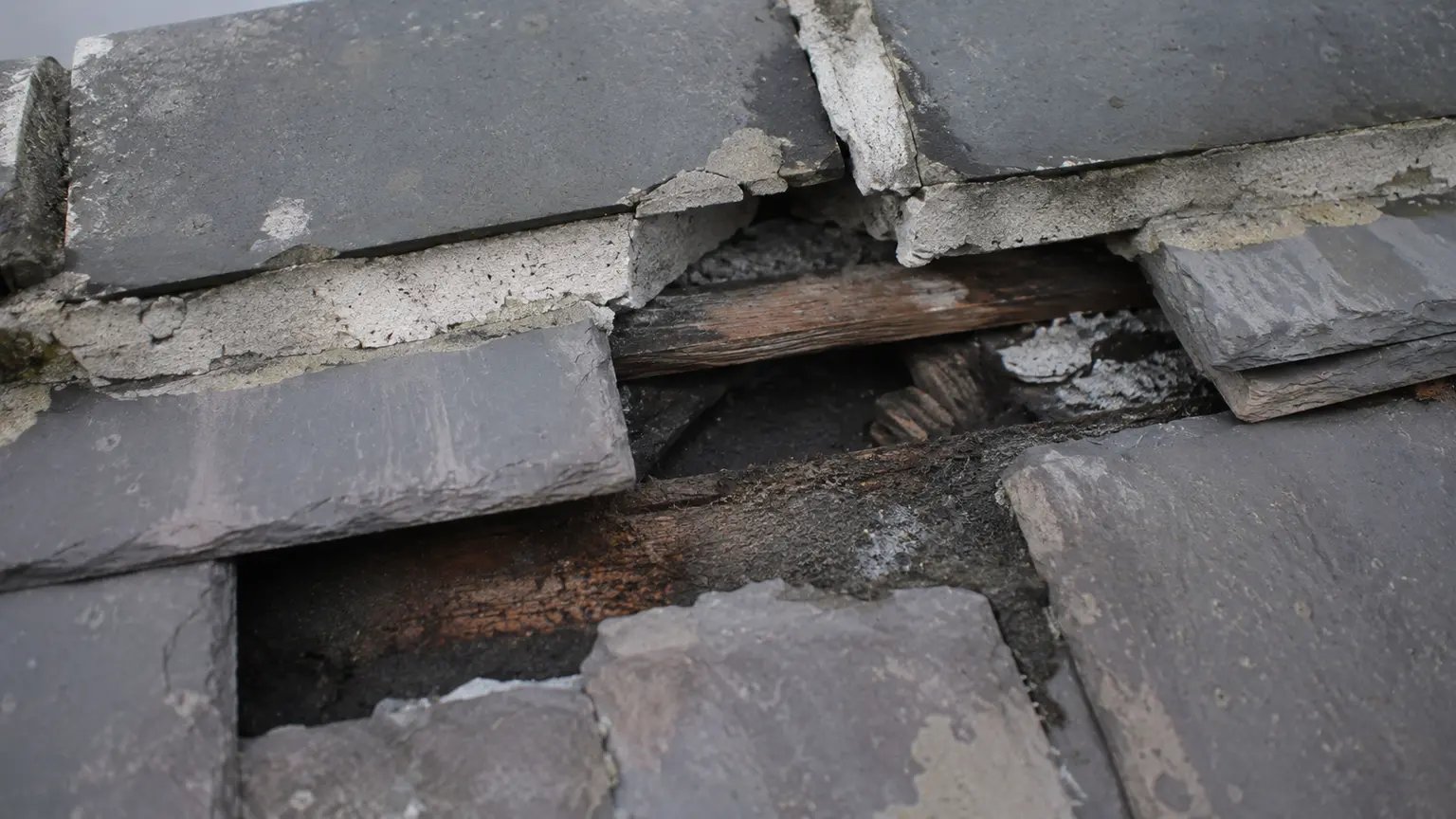
What causes a roofing emergency
Most roofing emergencies in Ireland trace back to wind and water. A named storm or Atlantic gale lifts and tears slates or tiles, exposing the felt and timber beneath to driving rain. A ridge or flashing that was already loose finally lets go in high wind. A blocked valley or gutter overflows in heavy rain and pushes water back under the covering. Fallen trees and large branches are another common culprit, punching through the roof or crushing a section outright.
Leaks behave deceptively in an emergency. Water rarely drips straight down from where it gets in, it tracks along rafters and battens before showing on the ceiling some distance away, which is why a proper repair starts by finding the real entry point. The damage you can see from the ground, a few slates on the lawn, is often only part of the story. A roofer will check the ridge, the valleys, the flashings around chimneys and the condition of the surrounding slates, because storm damage to one area usually loosens those next to it.
- Storm-lifted or torn slates and tiles
- Slipped slates leaving the roof exposed
- Failed ridge tiles and chimney flashing
- Fallen trees and branches on the roof
Emergency roofing jobs we connect you with
Storm damage repairs
After a storm, roofers replace lost slates and tiles, refix loose ridge tiles, repair torn felt and renew flashing around chimneys and valleys. Wind damage often loosens slates next to the obvious gap, so a good roofer checks the whole area rather than just the visible hole. Storm work is usually claimable on home insurance when reported promptly, and a roofer can supply the written report and photos your insurer will want before approving the permanent repair.
Emergency leak make-safe
A sudden leak through the ceiling needs the water stopped before anything else. Roofers trace the real entry point, which is rarely directly above the drip, and fit a temporary cover or patch to make the roof watertight. This buys time without committing you to a full repair in poor conditions. Once the make-safe is done and the leak has stopped, the roofer assesses the underlying fault and quotes the lasting fix.
Insurance and re-roof
Where storm damage is extensive, a make-safe holds the roof until the insurance claim is settled and the larger job can be scheduled. Roofers handle the permanent repair or, where the covering is widely damaged, a partial or full re-roof, and they provide the documentation your insurer needs. Keeping every receipt and photograph from the emergency stage makes the claim far smoother and protects you against any dispute over what was covered.
Rapid local response, county by county
When a roof fails, the roofer nearest you is the one who can get to you quickest, which is why a county-by-county directory works so well in an emergency. After a storm sweeps across the country, demand spikes everywhere at once and every roofer is fielding calls. The way to get seen fastest is to contact several local roofers rather than waiting on one, and that is exactly what this page is built for: pick your county, see who is near you, and ring round.
Coverage runs across all 26 counties, with rated roofers in Dublin, Cork, Galway, Limerick and Waterford and right out to Donegal, Kerry, Mayo and Wexford. Each listing shows a phone number, a public Google rating and opening hours, so you can judge who to trust and who is likely to answer. There is no lead form standing between you and the roofer and no fee for using the directory. You contact the roofer directly and deal with them direct, which is what you want when the clock is ticking and the rain is still coming down.
What emergency roof repairs cost
Indicative 2026 ranges for the emergency stages. The callout and make-safe come first, then the permanent repair is quoted separately once the roof is safe and the damage has been assessed.
- Same day to days
- Higher out of hours
- Buys time to plan
- Often insurance-claimable
- Quoted after assessment
- Scope depends on damage
The figures above are a guide. The only way to know what your repair will cost is a written quote once the roof has been made safe and the damage properly assessed, because access, the time of day, how far the roofer travels and the extent of the storm damage all move the price. After a make-safe, get the permanent repair in writing before agreeing the work, and where storm damage is involved, your home insurer may cover most of it.
VAT at 13.5 per cent applies to construction services. Emergency storm damage is often covered by home insurance, so keep every receipt and photograph and report the damage to your insurer promptly.
Tell us what happened, we will get a roofer to you
Choose your county and rated local roofers near you will come back to you fast. No fees, no obligation.
26 counties covered, pick yours to get matched
Choose your county
Select your county to get matched with rated local roofers for your emergency.
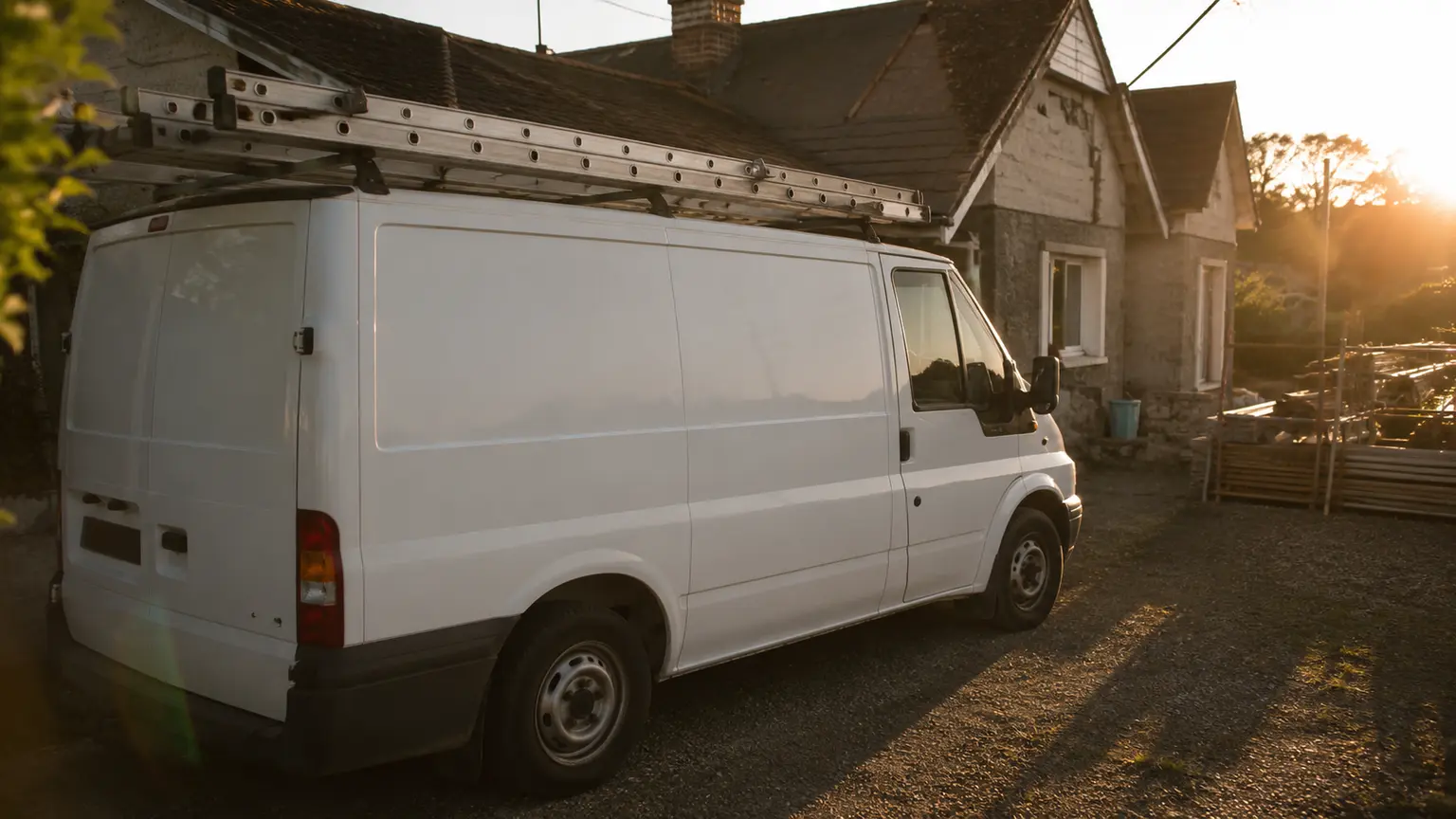
Choosing an emergency roofer safely
A roofing emergency is exactly when rogue traders go to work. After a big storm, so-called storm chasers go door to door claiming they spotted damage from the road, pressing worried homeowners to decide on the spot and often demanding cash up front. The pressure and the worry are the whole tactic. The simplest protection is to stay in control: never agree to work with someone who turned up unannounced, and never hand over money before the job is done.
Use a local roofer with a real address and a public Google rating, the kind listed in this directory, rather than a stranger at the door. Even in an emergency you can get the make-safe and the quoted repair in writing, confirm public liability insurance is in place, and check recent reviews before you commit. A genuine local roofer will be happy to give their business name and details and will not pressure you. Taking two minutes to check who you are dealing with is the difference between a fair price and being taken advantage of.
- Be wary of anyone who knocks unprompted after a storm
- Never pay in full or in cash before the work is done
- Use a roofer with a real address and Google rating
- Get the make-safe and repair quote in writing
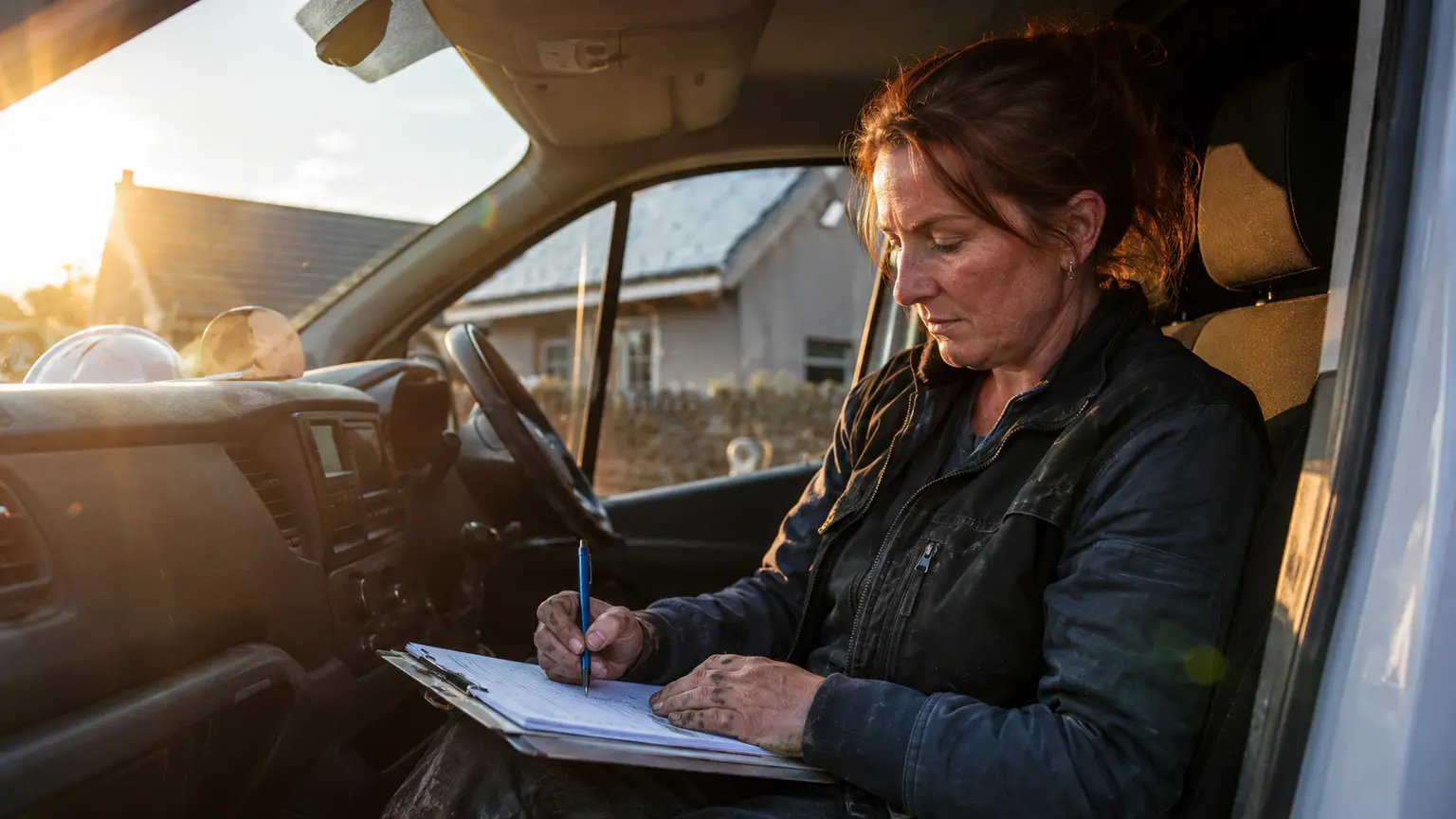
Insurance claims for storm damage
Most home insurance policies in Ireland cover sudden storm damage, but a claim succeeds or fails on the paperwork. Insurers will pay for damage that was sudden and unforeseen, not for wear and tear that built up over years, so reporting the damage promptly and proving it was storm-related is what matters. Photograph everything before you move or repair anything, keep the receipts for any emergency make-safe work, and check your policy excess so you know what you will pay yourself.
A reputable roofer helps the claim along by supplying a written report describing the damage and the make-safe carried out, with dated photos. Your insurer may want to send their own assessor to inspect before approving the permanent repair, so the temporary cover holds the roof in the meantime. Keep the emergency callout invoice separate and clear, because the make-safe is usually claimable too. Do the paperwork properly at the emergency stage and the permanent repair is far less likely to be disputed.
- Report storm damage to your insurer promptly
- Photograph the damage before anything is moved
- Keep all receipts for emergency make-safe work
- Expect an assessor before the permanent repair
Signs you have a roofing emergency
If you see any of these, treat it as urgent and get a make-safe callout. Water that reaches the structure turns a small fix into a far bigger job.
Water through the ceiling
Active dripping or a spreading damp patch means water is getting in right now and the roof needs covering.
Slates on the ground
Slates or tiles on the lawn after a storm mean the roof above is exposed to the next downpour.
Sagging or bulging ceiling
A drooping ceiling or bulging plaster is trapped water, a sign the ceiling could give way without fast action.
Daylight through the roof
Light visible through the roof from the attic means a hole or gap that is letting weather straight in.
Acting fast saves money and damage
The cost of a roofing emergency is rarely the roof alone. Once water gets past the covering it soaks the felt and timber, runs down into the insulation, stains and then collapses ceilings, and can reach light fittings and wiring. If water has got near your electrics, switch the circuit off and have a registered electrician check it before using it again. A leak left for a day in a storm can ruin a ceiling that costs more to replace than the roof repair itself. This is why the make-safe matters so much: stopping the water early limits the damage to the roof and keeps the bill down.
Speed also protects your insurance position. Insurers expect you to take reasonable steps to limit further damage once you know about a leak, so a prompt make-safe is not just sensible, it strengthens the claim. Photograph the damage, get the roof covered, keep the receipts, and report it. The homeowner who acts fast ends up with a contained problem, a cleaner insurance claim and a smaller final bill than the one who waits and hopes the next forecast is kinder.
What happens when you call out an emergency roofer
From the first phone call to the insurance paperwork, an emergency callout follows a clear sequence. Here is what a good roofer does at each stage so you know what to expect when the rain is still coming down.
Get an emergency callout- 1
Contact a local roofer
Pick your county, ring round the rated roofers near you and find the one who can attend soonest. After a storm, contacting several is the fastest way to be seen.
- 2
Make-safe to stop the water
The roofer secures the area and fits a temporary cover or tarpaulin so no more water gets in. This is the urgent step, and it can be done even in wet weather.
- 3
Assess the damage
With the roof safe, the roofer traces the real source of the leak and checks the surrounding slates, flashings and timber, because storm damage rarely stops at the obvious gap.
- 4
Written quote for the repair
You get the permanent repair priced in writing, so you can compare, check it against your insurance and agree the work before it starts. No surprises later.
- 5
Repair and insurance paperwork
The lasting repair is carried out in dry, safe conditions, and the roofer supplies the report and photos your insurer needs to settle a storm damage claim.
Get an emergency roofer in four steps
Finding a local roofer for an emergency takes minutes. Tell us what happened, see the rated roofers near you, ring round and choose, with no fees and no middleman standing between you and the help you need.
Tell us what happened
The problem, the urgency and your county.
See local roofers
Rated roofers near you with phone numbers.
Ring round fast
Find the one who can come out soonest.
Get the roof made safe
Deal direct, with no middleman fee.
Emergency roof repair questions, answered
How fast can a roofer come out for an emergency?
It depends on the roofer, your county and the weather. After a storm, local roofers are busy, so the realistic answer is same day to a few days for a make-safe visit. This is a directory, not a 24 hour call centre, but it gets you to local roofers fast so you can ring round and find the one who can attend soonest.
How much does an emergency roof callout cost in Ireland?
An emergency callout and basic make-safe typically costs between EUR 150 and EUR 400, depending on access, the time of day and how far the roofer travels. A temporary tarpaulin cover runs from EUR 200 to EUR 600. The permanent repair is quoted separately once the roof is safe and the damage has been assessed properly.
Will home insurance cover storm damage to my roof?
Most Irish home insurance policies cover storm damage, but you must report it promptly and prove it was sudden, not gradual wear. Keep all receipts for emergency make-safe work, photograph the damage before and after, and check your policy excess. The insurer may want their own assessor to inspect before the permanent repair goes ahead.
What should I do if my roof is leaking right now?
Stay calm and stay safe. Move valuables and electronics clear of the drips, put buckets under the water, and catch it before it spreads across the ceiling. If a ceiling is bulging with trapped water, a small pierce can release it safely into a bucket. Do not climb onto a wet roof. Then ring a local roofer for a callout.
Can you tarpaulin a roof in the rain?
Yes, an experienced roofer can fit a temporary tarpaulin or cover in wet weather to stop water getting in, which is the whole point of a make-safe visit. It is skilled, weather-exposed work at height, so it should never be a DIY job in a storm. A proper fix is carried out later once conditions are dry and safe.
Is it safe to go into the attic during a roof leak?
Only briefly and carefully. A quick look can help you trace where water is coming in and move stored items clear, but watch for wet, slippery joists, soaked insulation and the risk of water near light fittings and wiring. If you see water near electrics, switch the circuit off at the fuse board and stay out until a roofer or electrician checks it.
How do I avoid rogue traders after a storm?
Be wary of anyone who knocks unprompted claiming they spotted damage, pressures you to decide on the spot, or wants cash up front. Use a local roofer with a public Google rating and a real address, get the work in writing, and never pay in full before it is done. Storm chasers target worried homeowners, so take a moment to check who you are dealing with.
Do roofers work weekends for emergencies?
Many local roofers will attend a genuine emergency at weekends or out of hours, especially during storm season, though some charge a higher callout rate. Availability varies by roofer and county. Because this directory lists roofers across all 26 counties, you can contact several and find one able to come out when you need them.
What counts as a roofing emergency?
A roofing emergency is anything letting water in or putting people at risk: an active leak through the ceiling, storm damage that has stripped slates or tiles, a fallen tree or branch on the roof, or slipped slates that have left the roof exposed. If water is getting in or part of the roof could fall, treat it as urgent and get a make-safe callout.
Need a roofer out fast?
Find rated local roofers in your county, check their Google rating and contact them directly for an emergency callout. No middleman, no fees.
Get an emergency callout now