
Types of flat roofing in Ireland
EPDM rubber roofing
EPDM stands for ethylene propylene diene monomer, a synthetic rubber membrane that is either glued or mechanically fixed to the roof deck. It has become the most popular flat roofing material in Ireland over the past decade, and for good reason: the rubber membrane handles the Irish wet climate well, expanding and contracting with temperature changes without cracking.
Typical EPDM membranes are 4-6mm thick and come in large sheets that minimise the number of joins, which is where most flat roof failures occur. Lifespan is 30-50 years with minimal maintenance. Installed cost typically ranges from EUR 60-90 per square metre.
GRP fibreglass roofing
GRP (glass-reinforced plastic) is a seamless fibreglass system that cures to a very rigid, hard finish. It is particularly popular for flat roof extensions and garage roofs across Ireland. Because the finish is applied as a liquid and cures in place, there are no joins at all, making it extremely watertight.
Lifespan is 25-40 years, and maintenance requirements are very low. GRP is slightly more expensive than EPDM at EUR 70-100 per square metre installed, but the seamless finish is worth the premium for extensions where the roof doubles as a structural element.
Traditional felt roofing
Three-layer torch-on felt is the oldest flat roofing technology still in widespread use. It was the standard on Irish homes built before the 1990s and is still used today, particularly for budget jobs or like-for-like replacements on older properties.
The lifespan of modern torch-on felt is 10-20 years. Traditional felt is more prone to cracking in frost and to blistering in warm weather. Cost is EUR 40-65 per square metre installed, making it the cheapest option upfront, though lifetime costs are higher given the shorter lifespan.
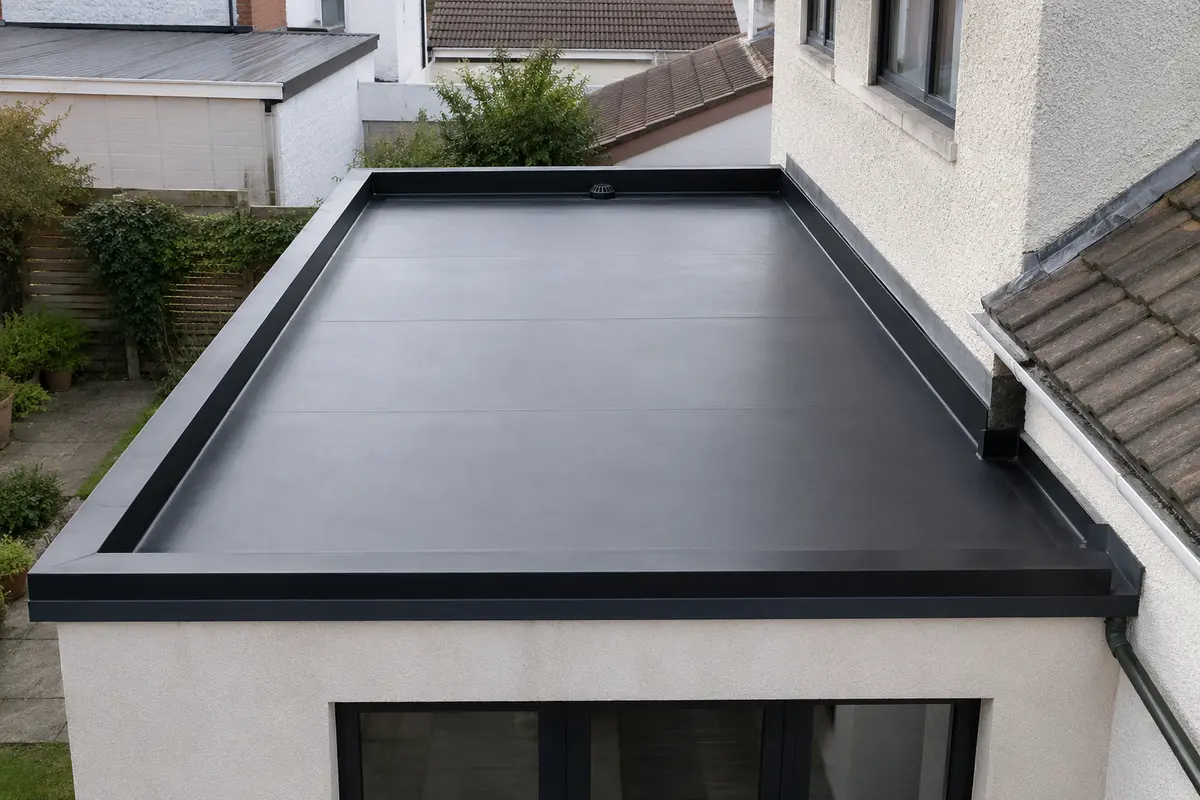
How long does a flat roof last in Ireland?
The Irish climate is one of the most demanding for flat roofing in Europe. Atlantic rainfall, persistent moisture and regular freeze-thaw cycles through winter all stress flat roof membranes. A roof that might last 40 years in southern Europe may only last 30 years in Connacht or Donegal.
As a general guide: felt roofs last 10-20 years, GRP roofs 25-40 years, and EPDM roofs 30-50 years. These figures assume reasonable maintenance and that the roof was correctly installed with adequate drainage. Signs of a failing flat roof include pooling water that does not drain within 24 hours, visible cracks or splits in the membrane, bubbling or lifting felt, and significant moss growth across the surface.
A professional inspection every five years is recommended for any flat roof. A roofer can probe around edges, outlets and any penetrations (pipes, vents, skylights) to catch early failures before they become leaks.
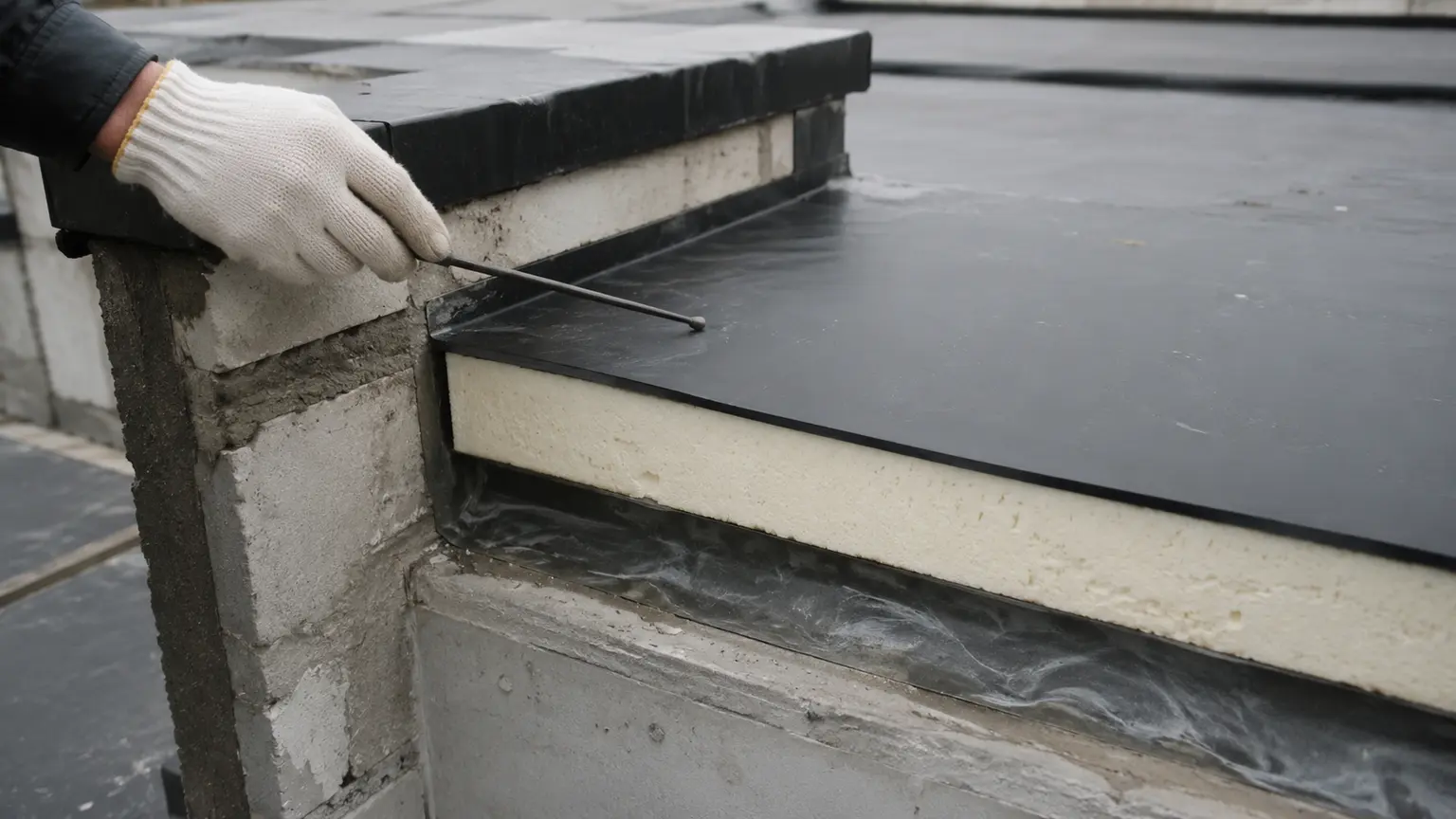
Flat roof costs in Ireland
For a typical small flat roof of around 20 square metres, you can expect to pay EUR 1,200-2,000 for felt, EUR 2,000-3,200 for EPDM, or EUR 2,400-3,800 for GRP. These figures are for 2026 and include stripping the existing covering, installing new insulation and laying the new membrane.
The main cost variables are: access (is scaffold needed, or can the roofer reach from a ladder?), whether the existing decking needs replacing, whether you are upgrading the insulation thickness, and whether new drainage outlets or box gutters are being installed. VAT at 13.5% applies to construction services in Ireland, so always confirm whether a quote is inclusive or exclusive of VAT.
Always get three written quotes before committing. Avoid contractors who offer only a verbal price or who request large cash payments upfront: these are common red flags in the roofing trade.
When to repair versus replace a flat roof
Repair is appropriate when the damage is isolated: a single blister or small crack near an edge, one area of ponding caused by a blocked outlet, or a minor separation at a flashing detail. A competent roofer can patch EPDM and GRP effectively, and a patch repair on a relatively new roof is entirely reasonable.
Replacement is the right call when cracking is widespread across the surface, when there are multiple leaks from different areas, when the roof is over 20 years old (for felt) or showing widespread membrane degradation, or when the decking beneath has rotted due to prolonged water ingress. Repeated patching on a failing roof is a false economy: each patch costs EUR 250-600, and the underlying membrane continues to deteriorate.
If you are replacing a flat roof, consider upgrading the insulation at the same time to meet current Part L building regulations. Adding 100mm of rigid insulation board adds EUR 20-35 per square metre to the job cost but significantly reduces heat loss through the roof. Because the insulation can be grant-supported as part of a wider home energy upgrade, it is worth involving an SEAI-registered insulation contractor when you plan the job.
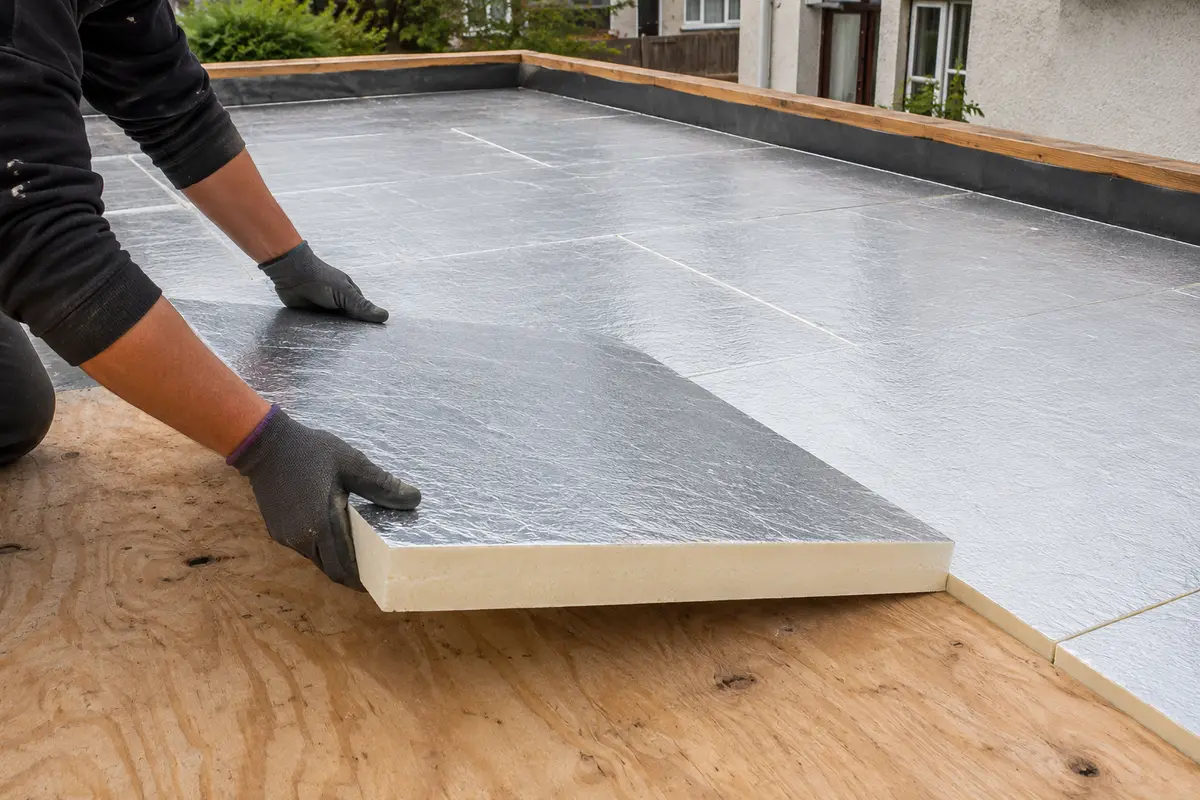
Planning permission for flat roofs in Ireland
Like-for-like replacement of a flat roof covering is exempt development under the Planning and Development Regulations: you do not need planning permission to replace felt with EPDM or GRP on an existing flat roof.
Changing the roof form, for example converting a pitched roof to a flat roof or vice versa, is likely to require planning permission. Flat roof extensions are generally exempt development up to certain floor area thresholds (typically 40 square metres for a rear extension on a house), but this depends on the specific property and what exemptions have already been used.
If you are unsure whether your project requires planning permission, check with your local authority planning office or consult an architect. Getting this wrong can be expensive: unauthorised development may have to be removed at your own cost.
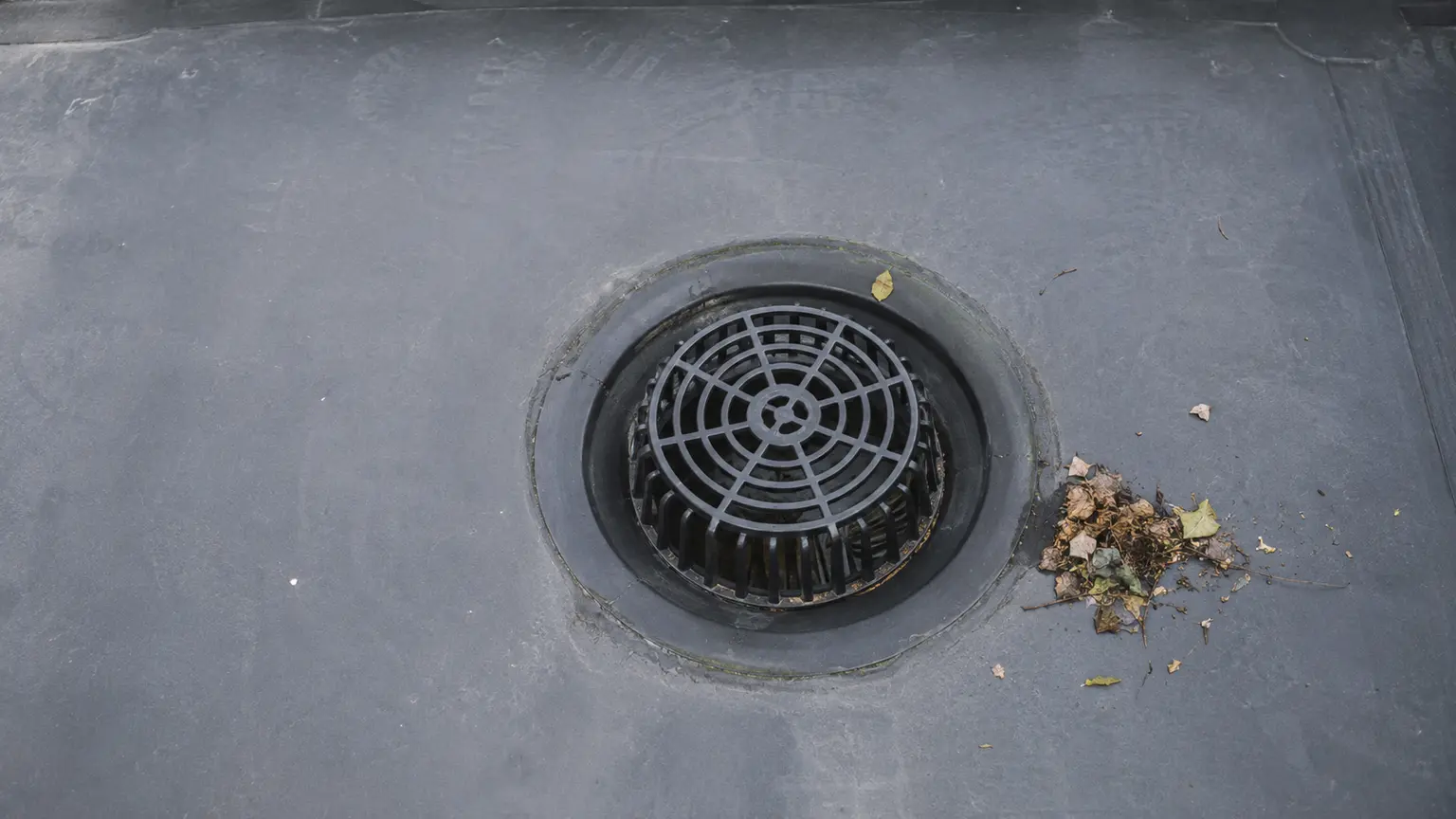
Flat roof drainage
Drainage is the single most important design consideration for any flat roof. Irish building regulations and good practice require a minimum fall of 1:80 towards drainage outlets, meaning the roof surface drops at least 12mm for every metre of run. Without adequate fall, water ponds, accelerating membrane degradation and increasing the risk of structural damage.
Drainage options include internal box gutters built into the roof structure, flat roof outlets that drain through the building to an internal stack, and perimeter gutters at the roof edge. Parapet walls can complicate drainage: if the wall is higher than the roof surface on all sides, internal drainage is essential.
Blocked drains are the most common cause of flat roof failure in Ireland. Leaves, moss and debris accumulate in outlets surprisingly quickly. Checking and clearing flat roof drainage outlets twice a year takes ten minutes and can extend the life of your roof by years.