
Natural versus synthetic slate
Natural slate is quarried stone, shaped by geological processes over millions of years. Each slate is unique in texture, thickness and colour variation. Synthetic slate is manufactured from fibre cement, recycled rubber or plastic composites and is designed to mimic the appearance of natural slate at a lower cost.
The lifespan difference is significant. Natural slate lasts 80-150 years, and there are Victorian roofs across Dublin, Limerick and Cork still covered in their original slates. Synthetic slate lasts 25-50 years, depending on the product. Visually, synthetic slate tends to look uniform and can appear slightly plastic compared to the varied texture of natural stone. For period properties, conservation areas or buildings in historic streetscapes, natural slate is usually the only appropriate choice. Local authorities and conservation officers will often specify natural slate for protected structures.
Irish slate: Killaloe and County Clare
Killaloe slate is quarried near Lough Derg in County Clare and is one of the finest roofing slates produced anywhere in Ireland or Britain. It is a dense, dark blue-black stone with excellent frost resistance, ideally suited to the Irish climate. Georgian and Victorian buildings throughout Ireland were originally roofed in Killaloe slate, and it remains the most authentic choice for restoration work on pre-1900 properties.
Killaloe slate is still available but supply is limited and prices are at a premium compared to imported slate. If you are repairing or restoring a building that originally had Killaloe slate, specifying Irish stone maintains the character of the building and supports local heritage. It also reduces transport carbon compared to stone shipped from Spain or Wales. Ask your roofer to source Killaloe slate from a reputable Irish supplier and request a sample before ordering to confirm colour and thickness match your existing roof.
Imported slate: Spanish and Welsh options
Spanish slate
Spanish slate from the Galicia region of north-west Spain is the most commonly specified natural slate on new and replacement roofs in Ireland today. Galician geology produces a dark grey to blue-black slate that is similar in character to Irish stone, which is why it has become the default import. Quality varies between quarries: the best Spanish slate (graded S1 under EN 12326) has very low water absorption and excellent durability.
Lifespan of good Spanish slate is 50-100 years. It represents strong value for money at EUR 45-75 per square metre installed, making it significantly more affordable than Irish or Welsh slate while still offering a natural stone appearance and decades of service life.
Welsh slate
Welsh slate from the Penrhyn and Ffestiniog quarries in north Wales is a premium product. The distinctive purple-grey colour is lighter than Spanish or Irish slate and has a very particular character that suits Victorian and Edwardian properties. Welsh slate is commonly specified for high-end restoration projects and period conversions where authenticity is a priority.
Lifespan is comparable to Irish Killaloe: 80-150 years. Welsh slate is more expensive than Spanish but is closer in character to original Irish slate and is an excellent choice where Killaloe is unavailable or the existing roof has a lighter tone. Your roofer should be able to source Welsh slate through specialist suppliers in Dublin or Cork.
Slate roofing costs in Ireland
For a new slate roof using natural Spanish slate, expect to pay EUR 60-90 per square metre installed. This includes stripping the existing covering, new breathable felt underlay, treated battens and laying the new slate, but not necessarily scaffold (confirm this with your roofer). For Irish Killaloe or Welsh slate, costs rise to EUR 90-140 per square metre or more depending on supply.
A partial re-slate covering half a typical semi-detached roof (approximately 35 square metres) in Spanish slate will typically cost EUR 3,000-8,000 depending on access and the condition of the existing structure beneath. Individual slate replacement during a repair visit costs EUR 80-150 per visit plus materials. Always factor in the cost of scaffold for any roof work above single storey level: this adds EUR 800-2,000 but is non-negotiable from a safety standpoint.
Matching old slates when repairing
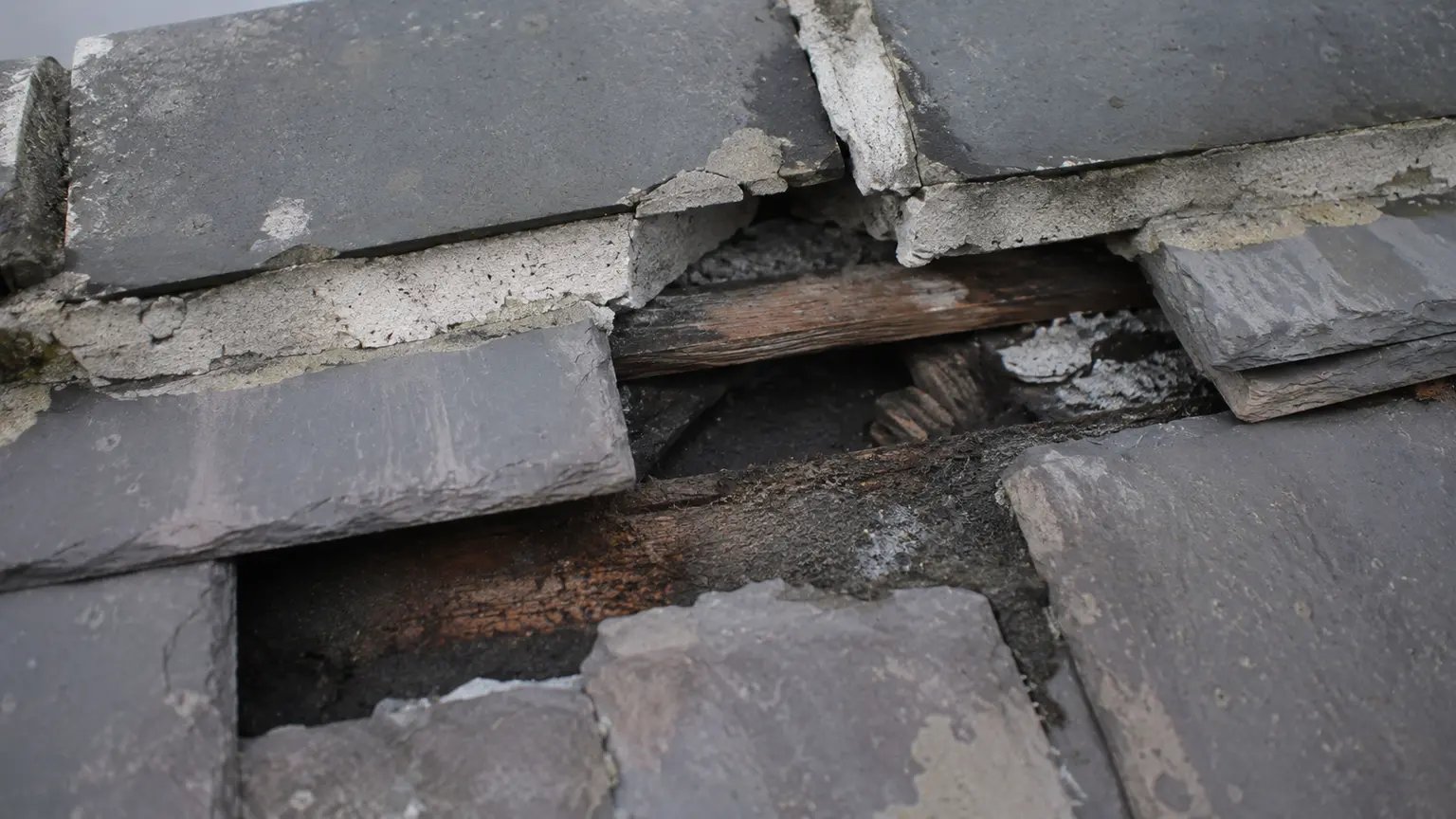
Matching existing slates is one of the most important and underappreciated aspects of slate roof repair. Colour, texture and thickness all vary between slate types, quarries and even different batches from the same quarry. A patch repair using the wrong slate looks obviously wrong and can affect the property's appearance and value.
Salvaged slates from reclamation yards are often the best match for older roofs. Reclamation yards across Ireland stock slates salvaged from demolition and re-roofing projects, and an experienced roofer will know where to source them. Tell your roofer the age of the property, the colour and texture of the existing slate, and whether it is thick-bed or thin. Taking a photograph of the existing roof before any repair work starts gives your roofer a reference point when sourcing materials.
If more than 30% of slates need replacing, it is worth considering a full re-slate rather than a patch repair. Mixing large areas of old and new slate creates a patchy appearance and the old slates left in place are likely to need replacement within a few years anyway.
Slate roof maintenance
Natural slate is a low-maintenance material but not a no-maintenance one. Inspect the roof from ground level every year using binoculars: you are looking for lifted or slipped slates, missing or cracked ridge pointing, and significant moss or lichen growth. Most slate roofs in Ireland develop moss over time; a biocide treatment is effective and far less damaging than pressure washing, which can crack or dislodge slates.
Lead flashings at chimneys, valleys and around any skylights should be checked every five to ten years. Lead hardens and develops hairline cracks over decades. Repointing flashing with lead or a compatible sealant is a small job that prevents significant water damage internally. A well-maintained slate roof should provide 80 years or more of service with no more than occasional minor repairs and flashing attention.