
Flat roofing contractors in Ireland
Searching for a flat roofer near you? Compare 662 rated local specialists for EPDM, GRP and felt flat roofs across all 26 counties. Tell us about the job and we will match you with roofers in your county.
Free and no obligation. Most roofers reply within 24 hours.
What do you need a flat roofer for?
Pick what brought you here and we will point you to the right local contractors. Every roofer in our directory is rated, reviewed and free to contact.
Flat roofing contractors by county
Select your county to see rated flat roofing contractors near you, with phone numbers, Google ratings and opening hours.
Flat roofing for Irish homes and businesses
Flat roofing is one of the most common roofing jobs in Ireland, covering rear extensions, kitchen and utility additions, garages, dormer cheeks, porches and large commercial roofs. The contractors in our directory install, repair and replace every flat roof system used in Ireland, from single-ply EPDM rubber to GRP fibreglass and modern reinforced felt. Whether you are adding an extension, replacing a tired felt roof that has started to leak, or maintaining a commercial roof, you can compare rated local specialists and contact them directly. From flat roofers in Dublin and Cork to EPDM specialists in Galway, Limerick and Waterford, there are rated contractors in every county.
The old reputation of flat roofs as the weak point of a house comes from decades-old felt that cracked and failed in the Irish weather. That technology has moved on. A flat roof installed today with EPDM or fibreglass, laid to the correct falls and finished with properly formed upstands and flashings, is a reliable, long-lasting roof that handles wind-driven rain and temperature swings without difficulty. The difference between a flat roof that lasts five years and one that lasts fifty is almost always the quality of the contractor, which is why comparing reviews and getting a written quote matters.
Use this page to compare the systems, get a feel for 2026 prices and shortlist a contractor, then send your details to get quotes back from rated roofers in your county. If you would rather read the technical detail first, our in-depth flat roofing guide covers build-ups, falls and detailing in full, and our roofing cost guide breaks down prices across every job type. Every roofer listed here is a real business with a public Google rating, and we never sell leads or take a cut.
EPDM vs GRP vs felt: which flat roof is best?
There is no single best flat roof, only the best fit for your roof and budget. Here is how the three systems compare at a glance.
| EPDM rubber | GRP fibreglass | Built-up felt | |
|---|---|---|---|
| Lifespan | 30 to 50 years | 25 to 30 years | 15 to 20 years |
| Relative cost | Mid | Highest | Lowest |
| Walk-on | Light foot traffic | Yes, fully | No |
| Joints | Seamless sheet | Seamless skin | Lapped layers |
| Best for | Extensions, garages | Balconies, dormers | Sheds, outbuildings |
For most Irish homeowners replacing an extension or garage roof, EPDM offers the best balance of price, lifespan and reliability.
EPDM rubber flat roofing
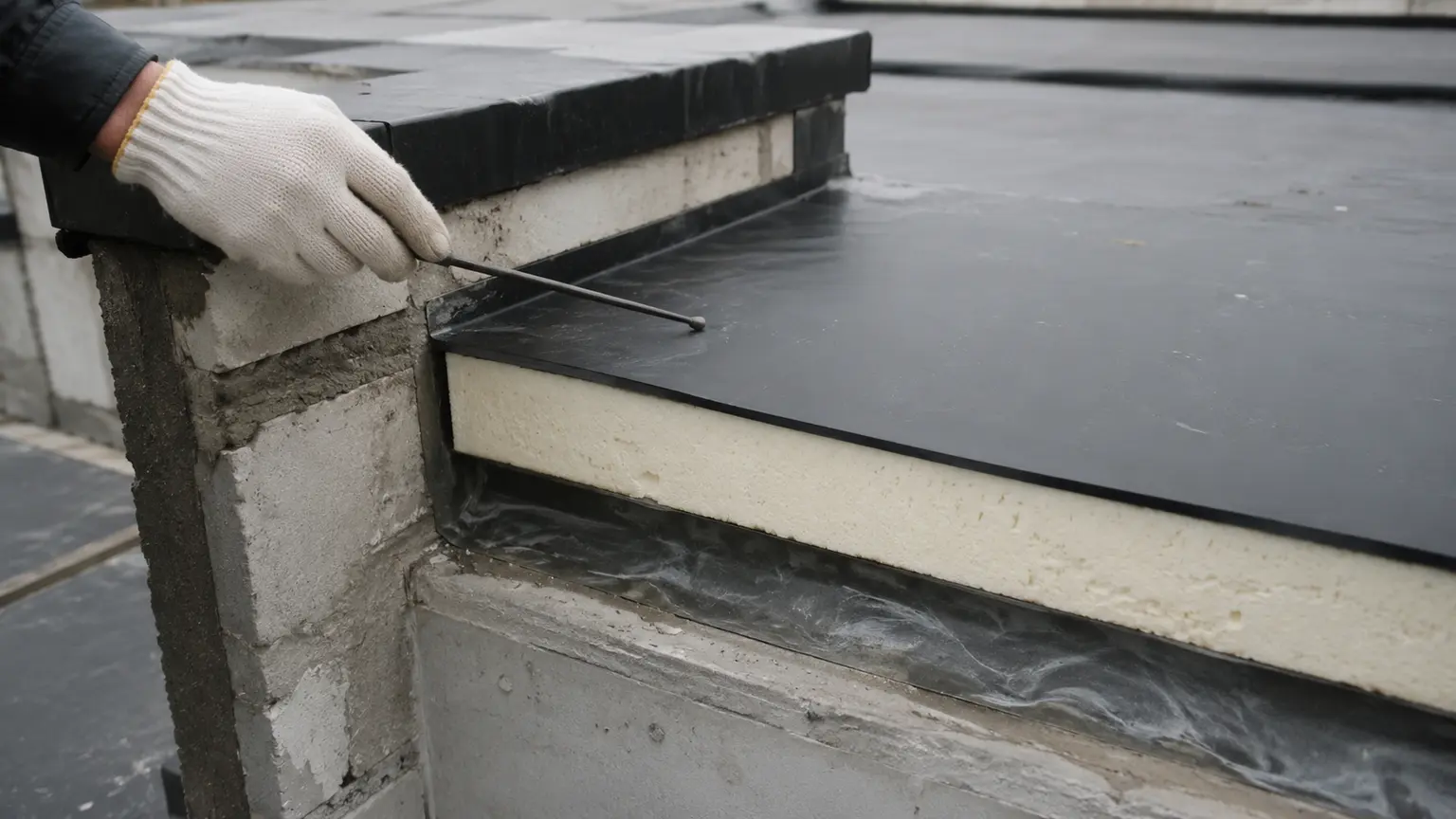
EPDM is a synthetic rubber membrane that has become the default choice for flat roofing in Ireland. It is supplied as a single sheet cut to fit the roof, so a typical domestic extension has no joints or seams across the field of the roof. With nothing to split or unstick, the most common cause of flat roof failure is removed. Rubber flexes, so as temperatures rise and fall across an Irish year EPDM expands and contracts without cracking, where older felt becomes brittle and fails.
The membrane is bonded to a prepared deck with adhesive and dressed neatly into the upstands, outlets and trims. It is light, which suits older timber decks, unaffected by UV and ozone, and recyclable at the end of its life. EPDM is the strongest all-round choice for extension roofs and garages, and for any flat roof that does not need to be walked on regularly.
- Single seamless sheet, no field joints to leak
- 30 to 50 year lifespan when professionally laid
- Flexes with temperature, no cracking or blistering
- Low maintenance and fully recyclable
GRP fibreglass flat roofs
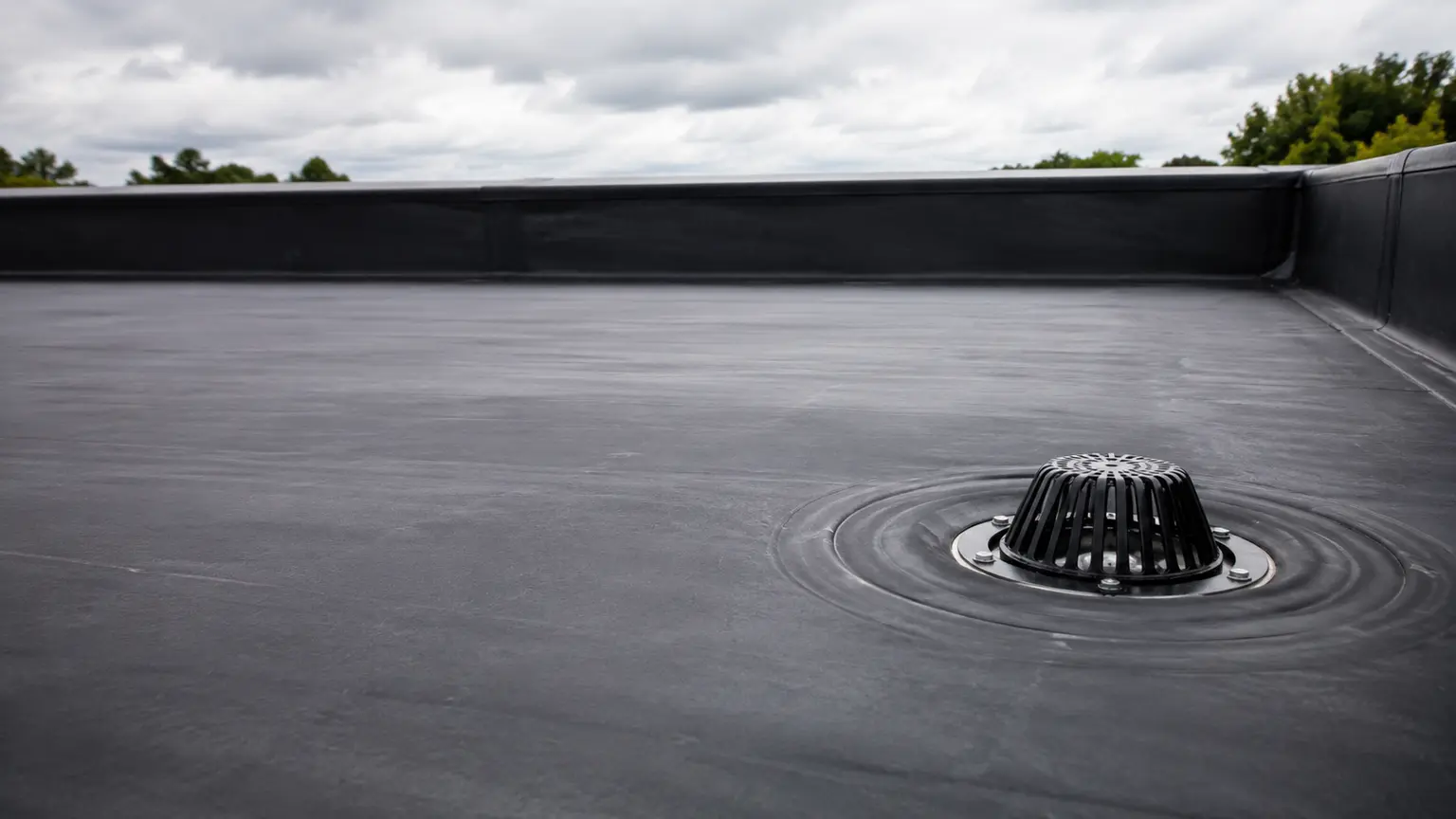
Glass reinforced plastic, or GRP fibreglass, is a wet-laid system that cures into one solid, seamless skin bonded to the roof deck. It produces a hard, durable surface that can be walked on, which makes it the go-to choice for balconies, terraces, dormer roofs and any flat roof that doubles as usable space. The finish can be coloured and given a non-slip texture, and the edge trims are formed in the same material for a crisp, integrated look. Laid well in dry, mild conditions, a fibreglass roof lasts 25 to 30 years.
Because GRP is laid wet and needs dry, mild weather to cure properly, installation is more weather-dependent than EPDM. A skilled installer plans the work around the forecast and lays the roof in a single continuous session so the layers bond as one. Done well, a fibreglass roof shrugs off foot traffic, garden furniture and the occasional dropped tool, which is why it is favoured wherever the roof will be used as a surface rather than just a cover.
- Seamless, solid, walk-on surface
- Ideal for balconies, terraces and dormers
- Coloured and non-slip finishes available
- 25 to 30 year lifespan
Felt, warm roofs and where each suits
Built-up felt roofing
Modern torch-on felt uses two or three heat-bonded layers with a mineral top finish, a very different product from the thin felt that gave flat roofs a bad name. It remains the most affordable flat roof system, which keeps it popular for garages, sheds and outbuildings. The trade-off is lifespan, at 15 to 20 years, and a higher chance of blistering as it ages. Torch-on work involves a naked flame at roof level, so it should only be carried out by an experienced roofer who follows safe hot-works practice. If budget is the deciding factor felt is reasonable, but for a roof you want to forget about for decades, EPDM usually offers better value over its life.
Warm roof vs cold roof
In a cold roof the insulation sits between the joists with a ventilated gap below the deck. In a warm roof it sits above the deck, directly under the membrane, keeping the whole structure warm and removing the need for ventilation. Warm roof construction is now the standard recommendation because it greatly reduces the risk of hidden condensation that rots flat roof timbers from the inside. When you recover a roof, Part L of the Building Regulations requires the insulation to be upgraded to current standards, typically by adding rigid PIR board at roughly EUR 20 to EUR 35 per square metre.
Commercial flat roofing
Most commercial and industrial buildings in Ireland are topped with large flat or low-pitch roofs. Commercial flat roofing contractors handle these at scale using single-ply PVC and TPO membranes, along with the box gutters, large outlets and rooflights that bigger roofs demand. The priorities shift on a commercial roof: minimising disruption to a working building, planning safe access, and keeping the premises watertight while work goes on below. Many roofers in our directory cover both domestic and commercial work, so you can find the right experience in your county.
Flat roofing for extensions, garages and dormers
The most common flat roofing job in Ireland is the rear extension. Kitchen, dining and utility extensions are almost always finished with a flat or very low-pitch roof, both because it keeps the new roofline below existing first-floor windows and because a flat roof is the simplest way to span the addition. For these, a warm-deck EPDM roof is the popular specification: it insulates the new room to current standards, lasts for decades, and can be detailed neatly around the upstand where the extension meets the existing house wall.
Garages and outbuildings are the other staple, where the decision usually comes down to budget against lifespan, with felt offering the lowest upfront cost and EPDM the best long-term value. Dormer roofs and dormer cheeks are a more specialised job, often combining a small flat roof on top with vertical cladding to the sides, and they reward a roofer comfortable with the flashing and lead detailing where the dormer meets the main pitched roof. Whatever the structure, getting the falls, upstands and junctions right is what keeps it dry.
Flat roof replacement cost in Ireland
Indicative 2026 supply-and-fit ranges, including stripping the old covering and laying new insulation. Get a written quote for your exact roof, as access and deck condition move the final figure.
- Garages and outbuildings
- 15 to 20 year life
- Extensions and garages
- 30 to 50 year life
- Balconies and terraces
- 25 to 30 year life
The figures above are a guide. The only way to know what your flat roof will cost is a written quote based on a survey, because the deck condition, the height and access, the insulation specification and any new outlets or box gutters all move the price. Sending your details to two or three local roofers and comparing their quotes side by side is the quickest way to a realistic figure, and it costs nothing.
VAT at 13.5 per cent applies to construction services. The main cost variables are whether scaffold is required, whether the timber deck needs replacing, the insulation thickness specified, and any new outlets or upstands.
Tell us the job, we will get a roofer to you
Choose your county and rated local flat roofers will come back to you with quotes, usually within 24 hours. No fees, no obligation.
26 counties covered, pick yours to get matched
Choose your county
Select your county to get matched with rated local flat roofers.
Flat roof repairs and common problems
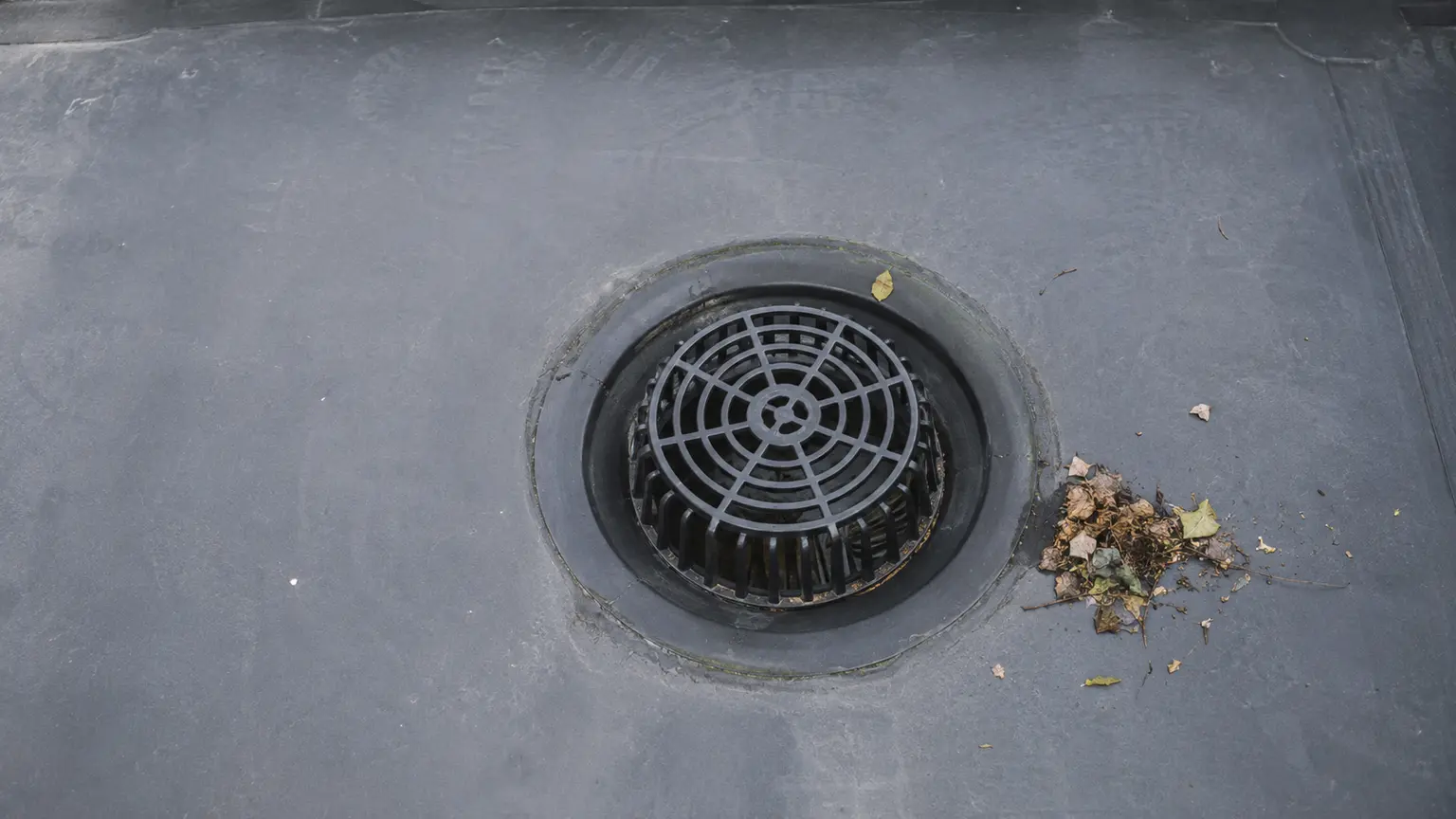
Not every flat roof problem means a full replacement. Many issues are localised and can be repaired quickly, buying years of extra life from a roof that is otherwise sound. Leaks often show up some distance from their source, tracking along joists before dripping through the ceiling, so a proper repair starts with finding the real entry point rather than sealing the nearest stain.
A roofer will check the upstands, outlets and seams, test for trapped moisture, and advise whether a patch repair is sensible or whether the membrane has reached the point where recovering the whole roof is the better spend. A roof that needs three or four repairs in a couple of winters is usually telling you it is finished, and the money spent chasing leaks is better put towards a new roof that resets the clock for decades.
- Split seams and lifted laps on ageing felt
- Blisters from trapped moisture under the membrane
- Ponding water from inadequate falls
- Blocked outlets and failed wall flashings
Signs your flat roof needs replacing
Catching a failing flat roof early saves money, because water that reaches the deck and insulation turns a simple recover into a structural repair. Watch for these signs.
Damp on the ceiling
Brown staining or damp patches below the roof mean water is already getting through.
Blistering and cracks
Widespread blistering or a bare, shiny felt surface points to a membrane near the end of its life.
Standing water
Pools that sit for days after rain mean the falls have failed and ponding is wearing the surface.
Repeated repairs
Three or four patch repairs in a couple of winters usually means the roof is finished.
Drainage, falls and looking after your flat roof
Good drainage is what separates a flat roof that lasts from one that fails early. A flat roof is never truly flat, it is laid to a slight fall of at least 1 in 80 so rainwater runs to the outlets rather than sitting on the surface. Standing water, known as ponding, accelerates membrane breakdown, encourages moss and adds weight to the structure. If your existing roof ponds badly, a good contractor will build in tapered insulation or correct the deck levels when recovering it so the new roof drains properly from day one.
A flat roof asks for little maintenance, but the small amount it needs makes a real difference. Twice a year, clear the outlets and gutters so water can drain freely and brush off any build-up of leaves and moss that holds moisture against the membrane. While you are up there, check the seams, upstands and flashings for lifting or splitting, and the surface for blisters or bare patches. Keep overhanging branches trimmed back and avoid dragging sharp items across the roof. Most flat roofing contractors offer maintenance visits, and a quick annual check is cheap insurance for a roof you rely on to keep the weather out.
How to choose a flat roofing contractor
The single biggest factor in how long a flat roof lasts is who installs it. Before you commit, ask for a written, itemised quote that states the system, the insulation specification and what is included. Check public liability insurance, look at Google reviews, and ask to see flat roofs they have completed locally. A reputable roofer surveys the roof before quoting rather than pricing it sight unseen.
Many EPDM and GRP manufacturers offer insurance-backed guarantees, but only when the roof is fitted by an approved installer, so ask whether the guarantee is product-backed and what it covers. Comparing two or three quotes side by side is the best way to judge both price and the quality of the contractor, and every roofer in our directory shows their Google rating and review count so you can compare before you call.
- Insist on a written, itemised quote
- Confirm public liability insurance is in place
- Check Google ratings and recent reviews
- Ask about the workmanship and product guarantee
- Confirm the build-up meets Part L insulation standards
What to expect when you replace your flat roof
From the first survey to handover, a flat roof replacement follows a simple, predictable sequence. Here is how a good contractor works, and what happens at each stage so there are no surprises on the day.
Get your survey booked- 1
Survey and written quote
The roofer checks the deck, the falls and the existing detailing on site, then prices the job in writing so there are no surprises later.
- 2
Strip back to the deck
The old covering comes off and the timber deck is inspected, with any soft or rotten boards replaced. This is exactly why overlaying an old roof is a false economy.
- 3
Warm-deck insulation
A vapour control layer and rigid insulation board go down to meet Part L, keeping the new room warm and avoiding hidden condensation in the structure.
- 4
New membrane and detailing
EPDM, fibreglass or felt is laid over the top and dressed into the upstands, outlets and edge trims. Good detailing at these junctions is where a flat roof is won or lost.
- 5
Clean up and guarantee
Most domestic roofs are done in one to three days. The contractor clears the site, removes the old materials and hands over the workmanship and product guarantees in writing.
Get flat roofing quotes in four steps
Getting quotes from local flat roofers takes minutes, not days. Tell us what you need, compare the roofers who come back to you, and choose with no pressure and no fees. Here is how it works from start to finish.
Tell us the job
The roof type, rough size and your county.
Get matched
See vetted local flat roofers near you.
Compare quotes
Written quotes, no obligation to proceed.
Choose your roofer
Deal direct, with no middleman fee.
Flat roofing questions, answered
How much does a new flat roof cost in Ireland?
A new flat roof in Ireland typically costs between EUR 1,100 and EUR 2,000 for a small garage of around 10 square metres, EUR 2,000 to EUR 3,800 for a 20 square metre extension, and EUR 3,800 to EUR 6,800 for a larger 40 square metre roof, depending on whether you choose felt, EPDM or fibreglass. The exact price also depends on whether the existing deck and insulation need replacing, and access to the roof. VAT at 13.5 per cent applies to construction services.
How long does a flat roof last?
A professionally installed EPDM rubber flat roof lasts 30 to 50 years, GRP fibreglass 25 to 30 years, and modern torch-on felt 15 to 20 years. Lifespan depends heavily on the quality of installation, the falls designed into the roof for drainage, and regular maintenance such as clearing leaves and checking flashings.
Is EPDM or GRP better for a flat roof?
EPDM is the better choice for most domestic extensions because it is a single seamless sheet with no joints to fail, it flexes with temperature changes, and it carries the longest lifespan. GRP fibreglass suits balconies, dormers and walk-on roofs where a hard, trafficable surface is needed. A good flat roofing contractor will recommend the system that fits how the roof will be used.
Can a flat roof be repaired or does it need full replacement?
Isolated problems such as a split seam, a blocked outlet or a single blister can usually be repaired. Once a felt roof has multiple blisters, ponding water and damp showing on the ceiling below, replacement is more cost effective than repeated patching. A roofer can carry out a survey and advise whether a repair will buy meaningful time or simply delay the inevitable.
Do I need planning permission for a flat roof?
Replacing an existing flat roof like for like does not require planning permission in Ireland. Building a new flat roof extension may fall under exempted development if it is within the size limits set out in the planning regulations, but you should always confirm with your local authority. Works must still comply with the Building Regulations, including Part L for insulation.
Why does my flat roof hold water after rain?
Standing water, known as ponding, usually means the roof was laid without enough fall or the structural deck has sagged over time. A correctly designed flat roof has a minimum fall of 1 in 80 so water runs to the outlets. Persistent ponding accelerates membrane failure and should be corrected when the roof is recovered.
Can you put a flat roof over an existing flat roof?
Overlaying a new membrane on top of an old one is sometimes possible but is rarely advisable. It traps any moisture already in the build-up, adds weight, and hides defects in the deck. Most reputable Irish roofers will strip back to the deck, check the timber and insulation, and lay a fresh warm roof build-up that meets current regulations.
How long does it take to replace a flat roof?
Most domestic flat roofs are replaced in one to three days. A small garage roof can often be stripped and recovered in a single day, while a larger extension with new insulation, outlets and flashings typically takes two to three. GRP fibreglass needs dry, mild weather to cure, so a contractor may schedule it around the forecast.
Do flat roofing contractors give a guarantee?
Yes. Reputable flat roofing contractors in Ireland provide a workmanship guarantee, usually 10 to 20 years, and many EPDM and GRP systems carry a separate manufacturer guarantee when fitted by an approved installer. Always ask what the guarantee covers and whether it is product-backed or insurance-backed.
Ready to sort your flat roof?
Compare rated flat roofing specialists in your county, check their Google rating and contact them directly. No middleman, no fees.
Get my free flat roof quotes