
Commercial roofing contractors in Ireland
Need a commercial roofer for a warehouse, factory, retail unit or office? Compare 662 rated contractors for single-ply, felt, liquid and metal roofs across all 26 counties. Tell us about the building and we will match you with roofers in your county.
Free and no obligation. Most roofers reply within 24 hours.
What do you need a commercial roofer for?
Pick what brought you here and we will point you to the right local contractors. Every roofer in our directory is rated, reviewed and free to contact.
Commercial roofing contractors by county
Select your county to see rated commercial roofing contractors near you, with phone numbers, Google ratings and opening hours.
Commercial roofing for Irish business premises
Commercial roofing covers the large flat and low-pitch roofs that top the buildings Irish businesses run on, from warehouses and distribution centres to factories, retail units, offices, schools, apartment blocks and farm sheds. The contractors in our directory install, re-roof, refurbish and maintain every system used on commercial buildings in Ireland, from single-ply PVC and TPO membranes to built-up felt, liquid-applied coatings and profiled metal sheeting. Whether you are specifying a roof for a new build, recovering a tired warehouse roof that has started to leak over stock, or setting up a maintenance contract, you can compare rated local specialists and contact them directly. From commercial roofers in Dublin and Cork to industrial specialists in Galway, Limerick and Waterford, there are experienced contractors in every county.
What separates a commercial job from a domestic one is rarely the membrane and almost always the constraints around it. The building is usually still in use, so the priorities are minimising disruption to a trading premises, planning safe access at height across a large roof, and keeping the building watertight while work goes on above stock, machinery or staff. A good commercial contractor surveys the roof, writes a method statement and safe-access plan, then phases the work in bays so the warehouse stays open, the shop keeps trading and the deck is never left exposed before rain. Getting the box gutters, large outlets, rooflights and upstands detailed correctly is what keeps a big roof dry for decades.
Use this page to compare the commercial systems, get a feel for 2026 prices per square metre and shortlist a contractor, then send your details to get quotes back from rated roofers in your county. Many of these contractors also handle smaller flat roofs, so our flat roofing page covers domestic EPDM, GRP and felt, and our roofing cost guide breaks prices down across every job type. Every roofer listed here is a real business with a public Google rating, and we never sell leads or take a cut.
Single-ply vs felt vs liquid vs metal
There is no single best commercial roof, only the best fit for your building, budget and how the roof will be used. Here is how the four main systems compare at a glance.
| Single-ply | Built-up felt | Liquid-applied | Profiled metal | |
|---|---|---|---|---|
| Lifespan | 25 to 35 years | 20 to 25 years | 20 to 30 years | 30 to 40 years |
| Relative cost | Mid | Lowest | Higher | Higher |
| Best for | Warehouses, retail | Smaller flat roofs | Complex details | Industrial sheds |
| On-site disruption | Low, cold-applied | Higher, hot works | Low, cold-applied | Low to medium |
| Hot works on roof | None | Yes, torch-on | None | None |
For most warehouses, retail units and offices, single-ply gives the best balance of cost, speed of install and lifespan with no hot works on the roof.
Commercial roof systems explained
The contractors in our directory work across all the main commercial systems. Here is what each one is, and the buildings it suits best.
Single-ply (PVC/TPO)
Lightweight membranes mechanically fixed or adhered as large sheets and hot-air welded at the laps for a continuous, watertight skin. Fast to lay over big areas with no naked flame, they are the modern default for warehouses, retail units, offices and schools. PVC and TPO both carry long manufacturer-backed guarantees and come in fire-rated build-ups.
Built-up felt
Two or three heat-bonded bitumen layers with a mineral cap sheet, the proven workhorse of smaller commercial flat roofs. It is the lowest-cost option and easy to detail, but heavier and slower, and the torch-on layers involve hot works that demand safe practice and a fire watch on a live building.
Liquid-applied
A cold-applied resin painted on in coats that cure to a seamless, fully bonded membrane, ideal for roofs crowded with upstands, plant, pipes and rooflights where sheet materials are awkward. It overlays many existing surfaces, adds no hot works and is the go-to for complex detailing and refurbishment.
Profiled metal sheeting
Insulated composite panels or built-up metal systems that span the long, low-pitch roofs of industrial sheds, factories and agricultural buildings. Durable and quick to erect over large areas, metal roofs last decades, and worn coatings can often be over-sheeted or coated rather than fully stripped.
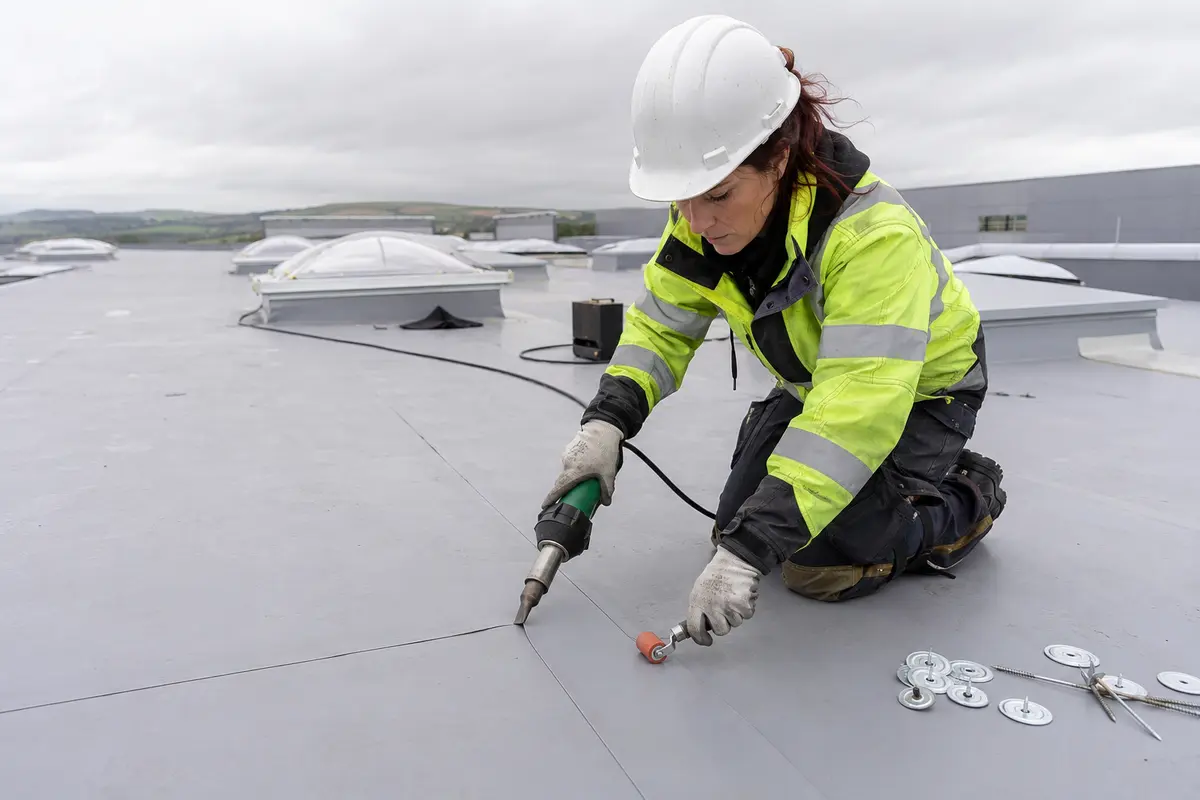
Single-ply membrane installation
Single-ply has become the default specification for large commercial flat roofs in Ireland. The membrane arrives as wide sheets that are mechanically fixed or fully adhered to the insulation, then hot-air welded along every lap to fuse the joints into one continuous, watertight skin. Because the welding uses hot air rather than a naked flame, there are no torch-on hot works on the roof, which simplifies the fire safety and insurance position on a live building and speeds the whole job up.
PVC and TPO are the two main single-ply membranes, both light enough to suit existing decks, both UV-stable and both available in fire-rated build-ups tested to standards your insurer will recognise. A good installer details the membrane neatly into the box gutters, large outlets, rooflight kerbs and parapet upstands, because on a big roof those junctions are where leaks start. Laid well, a single-ply roof gives 25 to 35 years of low-maintenance service with a manufacturer guarantee behind it.
- Hot-air welded laps, no naked flame on the roof
- Light enough for most existing decks
- Fire-rated build-ups for insurer requirements
- 25 to 35 year manufacturer-backed life
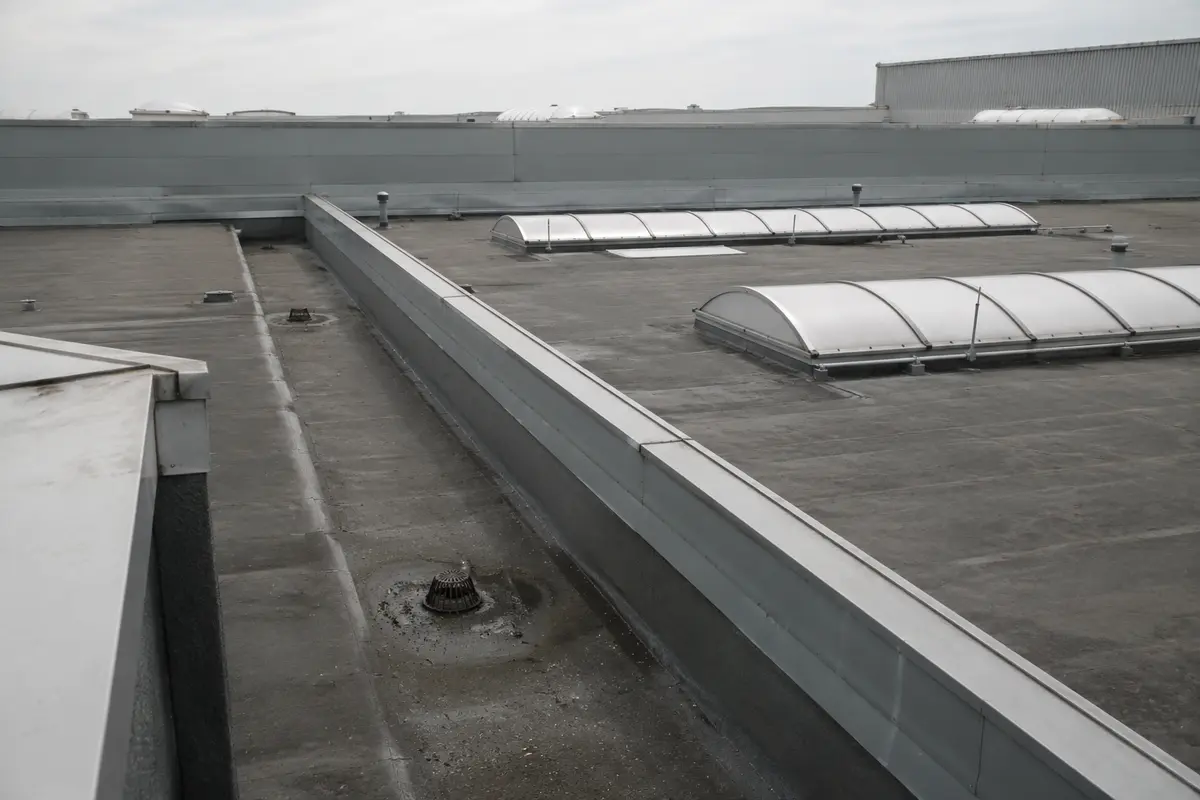
Box gutters, outlets and rooflights
A large commercial roof is more than a field of membrane. It is a system of box gutters running between bays, large rainwater outlets sized to clear an Irish downpour, rooflights letting daylight into the floor below, and parapet upstands around the edge. Every one of those features is a junction, and junctions are where big roofs fail. The volume of water a warehouse roof sheds means a single blocked outlet or split gutter liner can put litres of water over stock in minutes.
This is why commercial roofers pay particular attention to drainage capacity and gutter detailing. When recovering a roof they line or replace the box gutters, upsize outlets where the original sizing was marginal, and reseal or replace tired rooflights and kerbs. Getting the falls and outlet positions right so water runs off rather than ponding is the single biggest factor in how long the recovered roof lasts, and it is the part a cheap quote tends to skip.
- Box gutters lined or replaced, not patched
- Outlets sized for heavy Irish rainfall
- Rooflights and kerbs resealed or renewed
- Falls corrected so the roof drains, not ponds
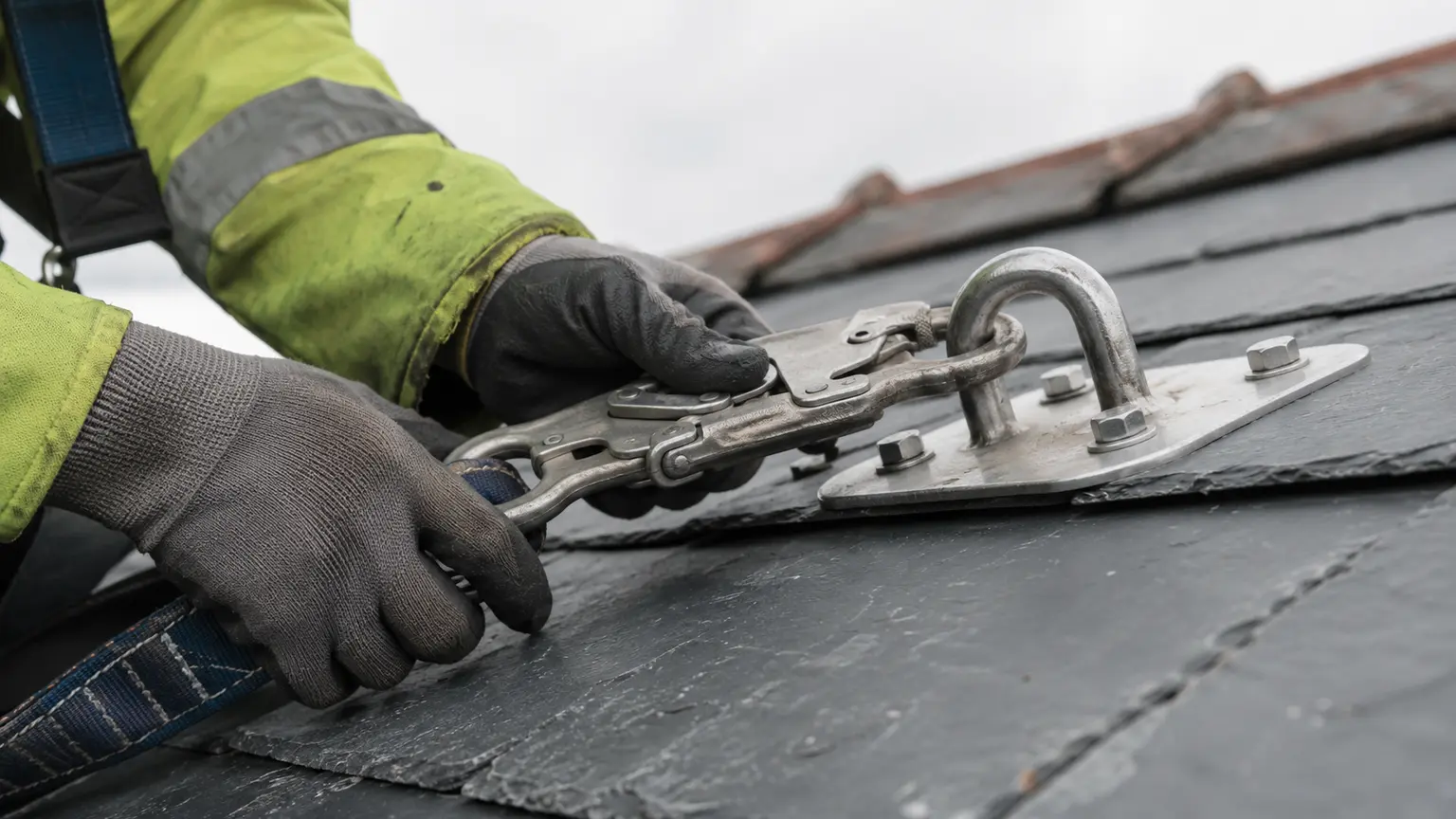
Working at height and site safety
Commercial roofing is work at height, and on a live premises that means safety is planned before a single sheet is lifted. A professional contractor produces a method statement and risk assessment, sets up edge protection or a managed access system, and uses harnesses, anchor points and fall arrest where edges or fragile rooflights are a risk. On an occupied building the plan also protects the people working and trading below, with deliveries, hoisting and any hot works controlled and supervised.
It is worth checking the safety paperwork as part of choosing a contractor, not as an afterthought. Ask to see the method statement and confirm both public liability and employer liability insurance are in place. Where built-up felt is used, a documented hot-works permit and fire watch should be part of the plan. A roofer who treats access and safety seriously is usually the same one who details the roof properly, because both come from the same disciplined approach to the job.
- Method statement and risk assessment before work starts
- Edge protection, harnesses and managed access
- Public and employer liability insurance confirmed
- Hot-works permit and fire watch where felt is used
New build, refurbishment and maintenance
New build and re-roofing
On a new build or a full re-roof the contractor works to a clean specification: the right insulation thickness for current Part L standards, a single-ply, felt or liquid membrane chosen for the building, and box gutters, outlets and rooflights detailed from scratch. Re-roofing an existing building usually means stripping back to the deck, replacing any tired insulation and laying a fresh, fire-rated build-up that resets the lifespan for decades and comes with a manufacturer guarantee.
Roof refurbishment and overlay
Where the deck and insulation are sound and dry, an overlay or liquid coating can extend a roof's life at a fraction of the cost of a full strip-out, with far less disruption to the building below. Liquid-applied systems are particularly suited to refurbishment because they bond over many existing surfaces and seal around the upstands, plant and rooflights that crowd an older roof. A moisture survey decides whether an overlay is sound or whether stripping back is the safer spend.
Planned maintenance contracts
The cheapest commercial roof is the one that never fails unexpectedly, and that comes from planned preventative maintenance. A typical contract is one or two visits a year to clear box gutters and outlets, check seams, upstands and flashings, and report condition with photographs. It catches blocked gutters and minor splits before they reach the stock below, and most manufacturer guarantees require regular maintenance to stay valid, so a contract protects the warranty as well as the roof.
Fire ratings, insurance and minimising disruption
On a commercial building the roof has to satisfy more than the weather. Fire performance matters to your insurer and to the building file, so commercial systems are specified in rated build-ups and tested to standards such as BROOF(t4) for external fire exposure. A reputable contractor confirms the fire rating before quoting, supplies the system datasheets, and hands over installation certificates so your insurer and any future buyer of the building can see exactly what was installed and how.
The other constant on a commercial job is the need to keep trading. A warehouse cannot close for a fortnight while its roof is recovered, so the contractor phases the work in bays, makes each section watertight with night seals at the end of every shift, and plans deliveries, hoisting and access around your opening hours. Done properly, a shop, office or distribution centre carries on operating throughout, and the only sign of the work is a tidy, fully guaranteed roof at the end of it.
Commercial roofing cost per square metre
Indicative 2026 supply-and-fit ranges per square metre, including stripping the old covering and laying new insulation. Get a written quote after a site survey, as scale, height and access move the final figure.
- Smaller flat roofs
- 20 to 25 year life
- Warehouses and retail
- 25 to 35 year life
- Detailing and sheds
- 20 to 40 year life
The figures above are a per square metre guide. The only way to know what your roof will cost is a written quote based on a site survey, because the scale of the roof, its height and access, the condition of the deck, the insulation specification and any new box gutters, outlets or rooflights all move the price. Larger roofs usually carry a lower rate per square metre. Sending your details to two or three local commercial roofers and comparing their quotes side by side is the quickest way to a realistic figure, and it costs nothing.
VAT at 13.5 per cent applies to construction services. The main cost variables are the scale of the roof, height and access, whether scaffold or access plant is required, the deck and insulation specification, and any new box gutters, outlets or rooflights. Always base the budget on a site survey.
Tell us the job, we will get a roofer to you
Choose your county and rated local commercial roofers will come back to you with quotes, usually within 24 hours. No fees, no obligation.
26 counties covered, pick yours to get matched
Choose your county
Select your county to get matched with rated local commercial roofers.
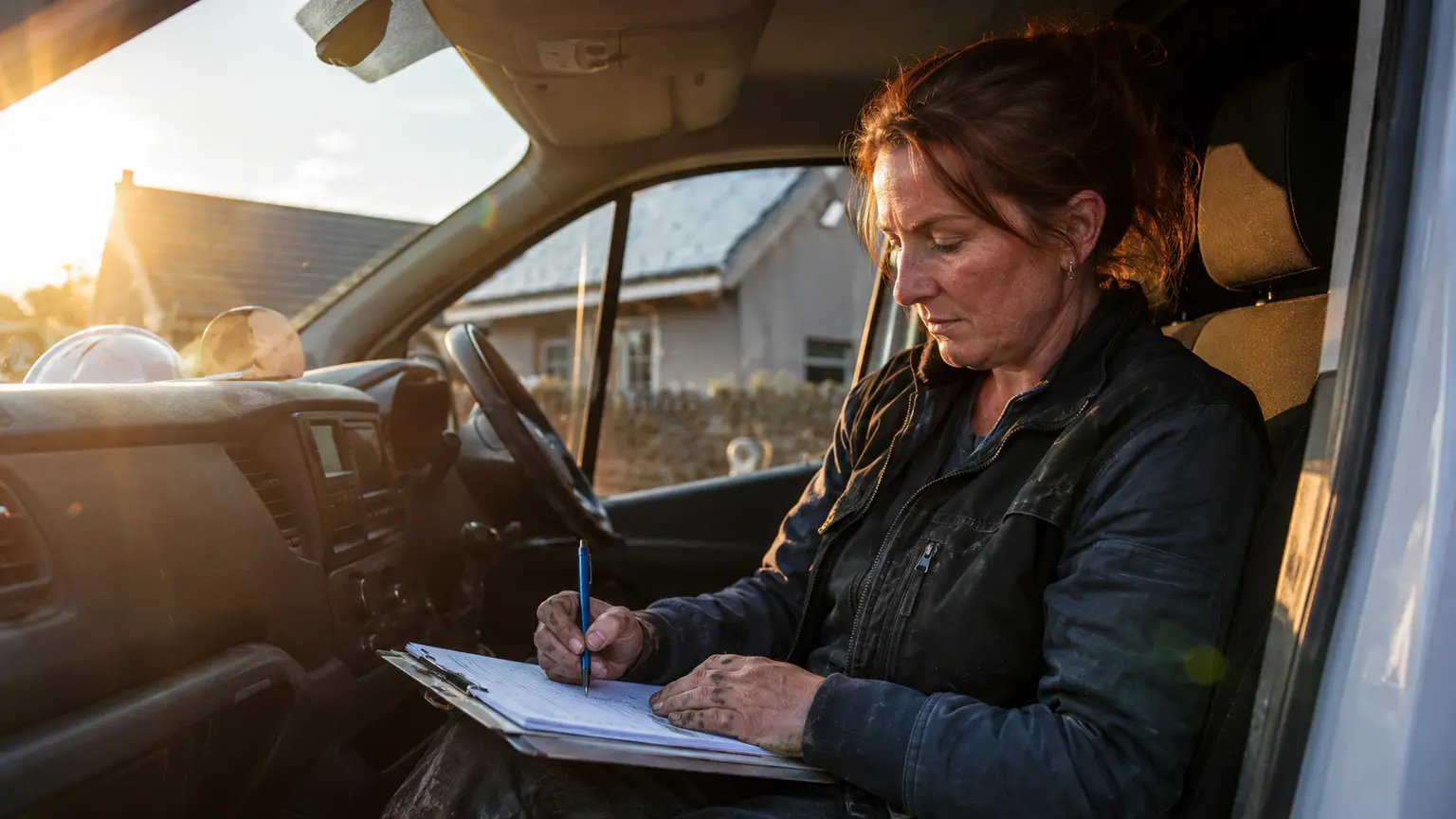
Choosing a commercial roofing contractor
The single biggest factor in how a commercial roof performs is who installs it. Before you commit, ask for a written, itemised quote that names the system, the fire rating, the insulation specification and what is included. Confirm both public liability and employer liability insurance, look at Google reviews, and ask to see commercial roofs they have completed locally. A reputable contractor surveys the building and writes a method statement before quoting, rather than pricing a large roof sight unseen.
Most single-ply and liquid manufacturers offer guarantees only when the roof is fitted by an approved installer, so ask whether the guarantee is product-backed or insurance-backed and what maintenance it requires to stay valid. Comparing two or three quotes side by side is the best way to judge both price and the quality of the contractor, and every roofer in our directory shows their Google rating and review count so you can compare before you call.
- Insist on a written, itemised quote naming the system
- Confirm public and employer liability insurance
- Check the fire rating and manufacturer approval
- Ask for a method statement and safe-access plan
- Check Google ratings and recent commercial work
Signs your commercial roof needs work
Catching a failing commercial roof early protects the stock, machinery and staff below, because water that reaches the deck and insulation turns a recover into a structural repair. Watch for these signs.
Ponding water
Pools that sit for days after rain mean the falls have failed and the membrane is wearing under standing water.
Blistered or split membrane
Widespread blisters, splits or bare patches point to a covering reaching the end of its working life.
Internal leaks over stock
Damp ceilings or drips onto stock, racking or machinery mean water is already getting through.
Blocked box gutters
Overflowing or silted gutters back water up under the membrane and over the edge into the building.
Drainage, gutter maintenance and planned care
Drainage is what separates a commercial roof that lasts from one that fails early. The roof is laid to a slight fall so rainwater runs to the outlets rather than sitting on the surface, and the box gutters carry that volume off the building. On a large roof the quantity of water is significant, so a single blocked outlet or silted gutter can back water up under the membrane and over the upstand into the premises in a single heavy shower. Clearing the gutters and outlets is the most important maintenance task there is.
A commercial roof asks for little, but the little it needs makes the difference between a planned spend and an emergency one. Twice a year, clear the box gutters and outlets so water drains freely, check the seams, upstands and flashings for lifting or splitting, and inspect the rooflights and kerbs. A planned preventative maintenance contract folds all of this into one or two scheduled visits with a photographic report, catches small defects before they reach the stock below, and keeps any manufacturer guarantee that requires regular maintenance valid.
What to expect on a commercial roofing project
From the first survey to handover, a commercial re-roof follows a simple, predictable sequence. Here is how a good contractor works, and what happens at each stage so there are no surprises on a live building.
Get your survey booked- 1
Site survey and specification
The roofer surveys the roof at height, takes moisture readings, checks the deck, falls and drainage, then specifies the right system and prices the job in writing.
- 2
Method statement and access plan
A method statement, risk assessment and safe-access plan are drawn up, with deliveries, hoisting and any hot works phased around your trading hours.
- 3
Strip and prepare
Working in bays, the old covering is stripped back, the deck inspected and any soft boards or tired insulation replaced, so each section is sound before the new build-up goes down.
- 4
Install the system
The new membrane, insulation, box gutters, outlets and upstands are installed and detailed, with each bay made watertight by the end of every shift to protect the premises below.
- 5
Sign-off and guarantee
The contractor clears the site, removes the old materials, and hands over the workmanship and manufacturer guarantees with the installation and fire-rating certificates in writing.
Get commercial roofing quotes in four steps
Getting quotes from local commercial roofers takes minutes, not days. Tell us about the building, compare the contractors who come back to you, and choose with no pressure and no fees. Here is how it works from start to finish.
Tell us the job
The building type, rough roof size and your county.
Get matched
See vetted local commercial roofers near you.
Compare quotes
Written quotes, no obligation to proceed.
Choose your roofer
Deal direct, with no middleman fee.
Commercial roofing questions, answered
How much does a commercial roof cost per square metre in Ireland?
As a 2026 guide, built-up felt runs roughly EUR 60 to 90 per square metre supplied and fitted, single-ply PVC or TPO EUR 70 to 110, and liquid-applied or profiled metal EUR 90 to 140. Scale, height, access, the deck condition and rooflights all move the figure, so the only reliable number comes from a site survey and a written quote.
Single-ply or built-up felt for a commercial flat roof?
Single-ply PVC or TPO is the modern default for large flat roofs because it is fast to lay, light and carries a long manufacturer-backed life. Built-up felt is cheaper upfront and proven, but heavier and slower with hot works on site. For most warehouses and retail units single-ply gives the best balance of cost, speed and lifespan.
Can you re-roof while we keep trading?
Usually yes. Commercial roofers phase the work in bays, keep completed areas watertight overnight and plan deliveries and access around your opening hours. A good contractor writes a method statement that protects stock and staff below, so a warehouse, shop or office can often stay open throughout the project with minimal disruption.
How long does a commercial roof last?
A professionally installed single-ply membrane lasts 25 to 35 years, liquid-applied systems 20 to 30, modern built-up felt 20 to 25 and profiled metal sheeting 30 to 40. Lifespan depends heavily on falls and drainage, the standard of detailing at upstands and gutters, and whether the roof gets a planned maintenance visit each year.
Do you offer planned maintenance contracts?
Many commercial roofers offer planned preventative maintenance, typically one or two visits a year to clear box gutters and outlets, check seams, upstands and flashings, and report on condition with photographs. A small annual spend catches blocked gutters and minor splits before they become internal leaks, and it protects manufacturer guarantees that require regular maintenance.
Will the roof meet fire and insurance requirements?
Commercial systems are specified to the fire performance your building and insurer require, with single-ply, felt and liquid membranes available in rated build-ups and tested to standards such as BROOF(t4). A reputable contractor confirms the fire rating, provides the system datasheets and supplies installation certificates so your insurer and building file are satisfied.
Is an overlay cheaper than stripping the old roof?
An overlay can be cheaper and quicker where the existing deck and insulation are sound and dry, because it avoids strip-out and disposal. It is not always wise: trapped moisture, failed falls or a weak deck rule it out. A survey with moisture readings tells the contractor whether to overlay or strip back to the deck.
What guarantee comes with a commercial roof?
Reputable commercial roofers provide a workmanship guarantee, commonly 10 to 20 years, and most single-ply and liquid systems carry a separate manufacturer guarantee when fitted by an approved installer, sometimes insurance-backed. Always ask whether the cover is product-backed or insurance-backed and what maintenance the guarantee requires to stay valid.
How do you keep our building watertight during the work?
Roofers strip and recover the roof in manageable bays rather than opening the whole area at once, fit temporary covers and night seals, and watch the forecast so no exposed deck is left before rain. The method statement sets out how each section is made watertight at the end of every shift to protect the premises below.
How do I choose a commercial roofing contractor?
Look for a written, itemised quote naming the system and fire rating, proof of public liability and employer liability insurance, a safe-access and method statement, and recent commercial roofs you can reference. Check the Google rating, confirm the manufacturer approval behind any guarantee, and compare two or three quotes before you commit.
Ready to sort your commercial roof?
Compare rated commercial roofing contractors in your county, check their Google rating and contact them directly. No middleman, no fees.
Get my free commercial roof quotes